
What You Need to Know
Bombs. Bombs. War. Natural disaster. Tear gas. Bombs. Natural disaster. Giant flaming building. Rocket ship. Protests. Luigi Mangione. Celebrities. Celebrities. TikTok.
All of this and more is conveyed to me in fourteen seconds of flashbanging, better known as an advertisement, which I watched in lieu of writing my first blog post for the Lumos Foundation. ABC News determines the above to be the most important stories of our current age, condensed into a ten-minute compilation—including the day’s must-see viral videos.
What You Need to Know promotes itself as the easiest way to stay informed without wasting your time scrolling through headlines or, heaven forbid, flipping through a newspaper. But should it be easy to stay informed? Would organizations such as Shout Out UK, my Lumos project partner, exist if this were true?
Of course, the only way to know was to watch the program myself.
Cards on the table: I have a strong distaste for broadcast news. Always have. When I’m engaging with the news today, I’m reading it. But I did grow up surrounded by broadcast news. When I woke up, local news would be the first thing I saw on the television. When I got home from school, the same channel would greet me as I dropped my bag. Over time, I adopted my father’s “isms” and insisted that I had no interest in news anymore because all they ever showed you were crime and gore and bombs and fires that had little to no impact on how I lived my life. So, before I pressed play on ten minutes of the most important news of the day (actually, it was just six minutes), I was already less than pleased.
The stated goal of What You Need to Know is for viewers to “start [their] day informed,” but this hardly comes across as a priority. Instead, flashy, gruesome pictures are thrown at us faster than we can comprehend; networks will do anything to keep us watching for one more minute, one more second. Your engagement, not your understanding, pays ABC’s bills. And while we have your attention, check out this great new show that just happens to be streaming on Disney+.
I drew a tally chart in my notebook to take a poll of their news segments. Here was my total:
- Video of bomb dropping, preferably slow motion: 2
- Gritty natural disaster footage: 2
- General war devastation: 2
- “Insightful analysis,” as promised in promotional materials: 0
- Jared Leto: 1
When news is presented this way, how can we expect younger generations to engage thoughtfully with the world around them? There’s no time for them to stop and think. Before they can reach for the “pause” button, they’ve already been bombarded by three devastating wildfires, slow-motion bombs, and—apparently—loose tires running down the highway in Philadelphia. But by slapping the word “news” next to this endless scroll of content, we’re conditioning viewers to see these events as such. It’s easy to think of ourselves as above this misconception, but in reality, Gen Z knows a lot less about news than it thinks. What gatekeepers exist to guide us through the modern media landscape, and how can we transition from passive viewer to active consumer?
I took a Media Ethics course my sophomore year at Belmont, a required class that I wasn’t particularly enthused about when I registered. It would go on to become my favorite college course and the catalyst for my Lumos project. Erin Carson—current Managing Editor of News & Features at ZDNET and my professor—set out to adapt the ethics course to better suit the current needs of digital citizens.
“When I started teaching Media Writing 1, I got slide decks from a professor,” Carson told me earlier this summer, “and it was funny because she had the example that Jimmy Fallon is not a journalist. I don’t think I’m worried about them [students] and Jimmy Fallon.”
What she was worried about was the rising popularity of “news influencers”: self-proclaimed journalists posting their opinions on current events on social media. Much like What You Need to Know, the word “news” is inflated. If information is presented professionally enough, viewers take it to be true.
Right?
“We live in this time where it’s really easy to let media wash over you,” Carson argued. “I’m just as bad as anyone else about scrolling TikTok. You can just put your brain in neutral and let it happen.”
Which I understand more than I’d like to admit. I scroll on social media first thing in the morning and right before I go to bed. I’m a hypocrite, like any other self-righteous young adult. Why should I—or anyone—engage thoughtfully with media if influencers and news sources alike are so willing to stoop to our level? On the surface, it’s a win-win for both sides: the news conglomerates get their cash, and we get to numb ourselves to reality.
So why would anyone willingly burst this bubble, and what kind of masochist would set out to try?
Me, evidently. Because if I don’t, that means the three months I spent begging for a flatshare were for naught. I can’t dwell on the thought too long, since I have 319 years of British political history to study. In the meantime, I’ll take solace in knowing I have, if nothing else, a shoebox flat in North London and two tickets to see All the President’s Men on August 9th.
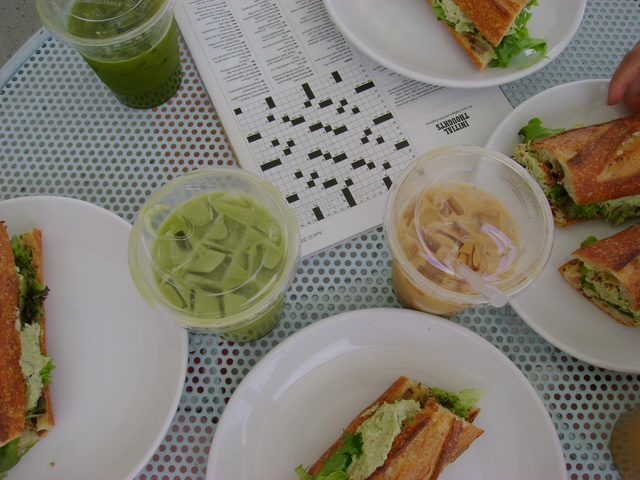
 One of the things I’ll miss most: sandwiches, coffee, and the daily crossword with friends.
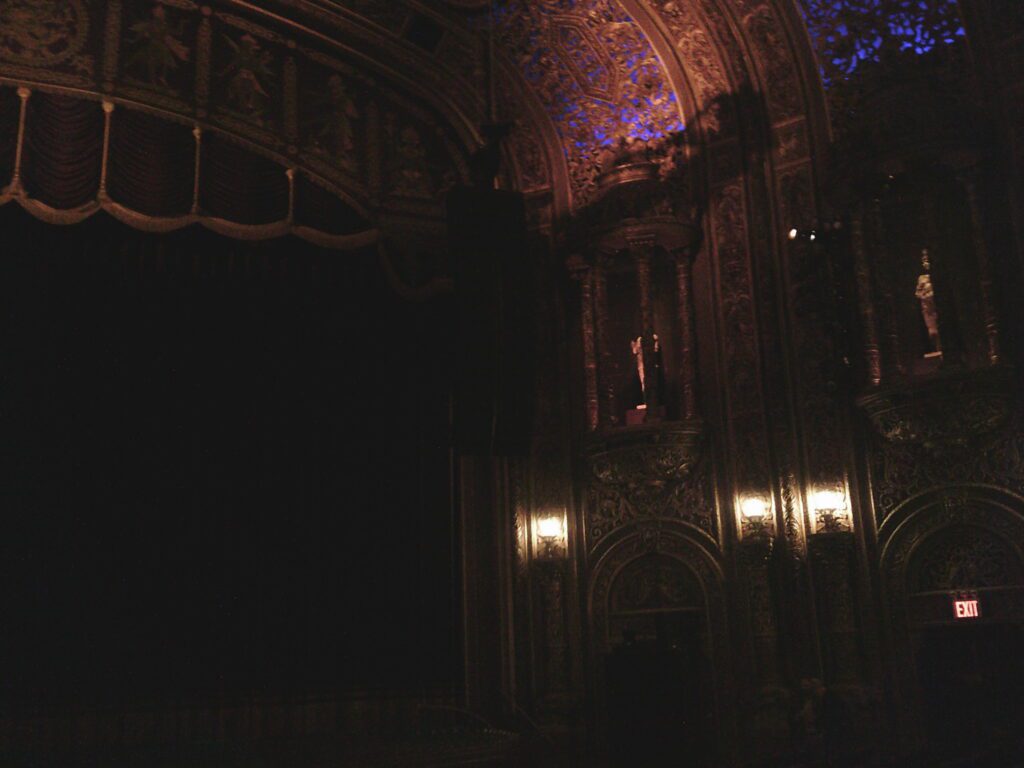
- The confines of the Palace Theater, taken minutes after the credits rolled on “All the President’s Men”
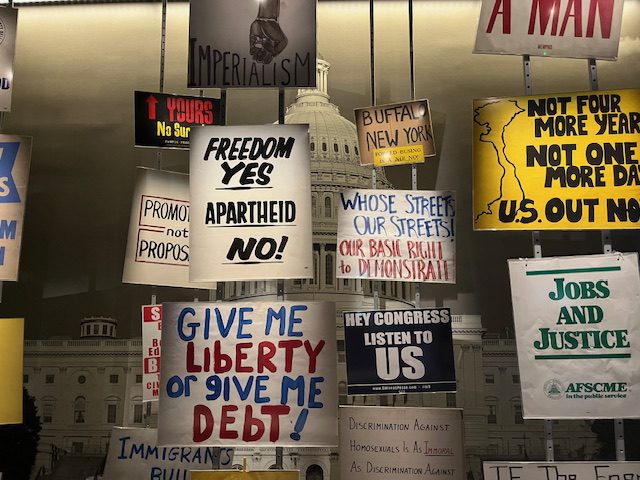
- A corner of the “American Democracy: A Great Leap of Faith” exhibit at the National Museum of American History
What You Need to Know, “Explore Disney+”: https://www.disneyplus.com/explore/articles/what-you-need-to-know-show
What You Need to Know trailer, via toaster oven recording: https://www.youtube.com/watch?v=RXcA_hN5TNE
More from this Author
Ready to Travel?
Are you curious and ready to dream big? Do you desire to challenge yourself and make a meaningful difference? Become a Lumos Traveler - let’s get you started!