
An American in Parliament
If messages of the manosphere are already so deeply ingrained in victims, what approach is required to help them? Or is there simply no way to reach someone who doesn’t want to be reached?

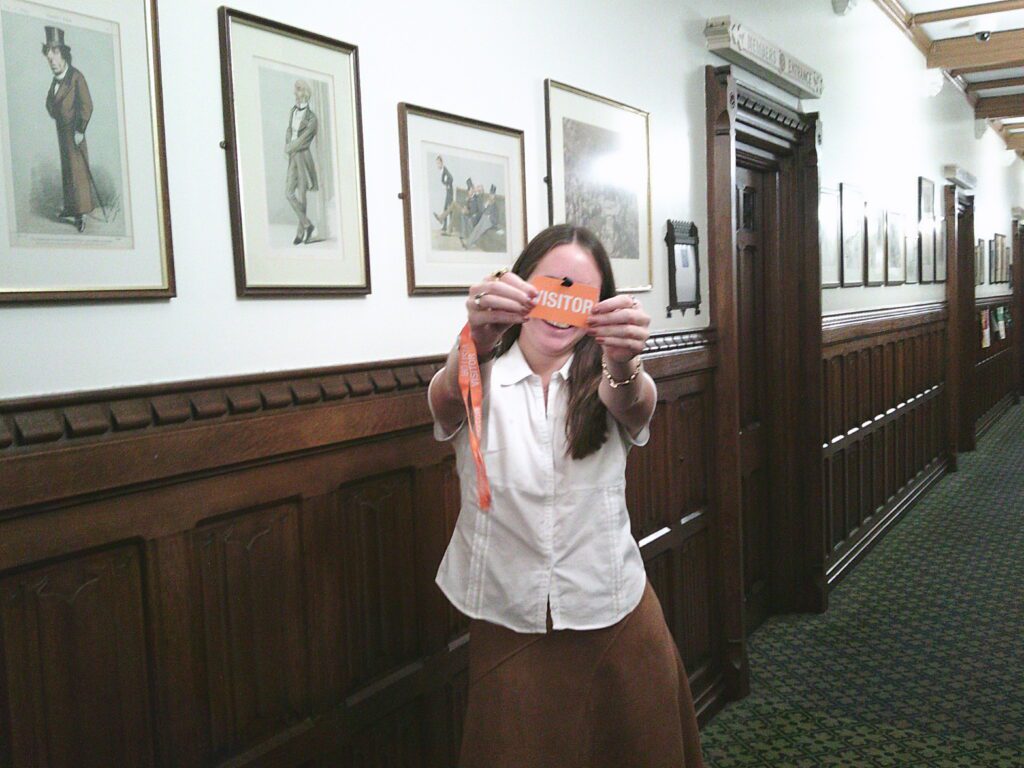
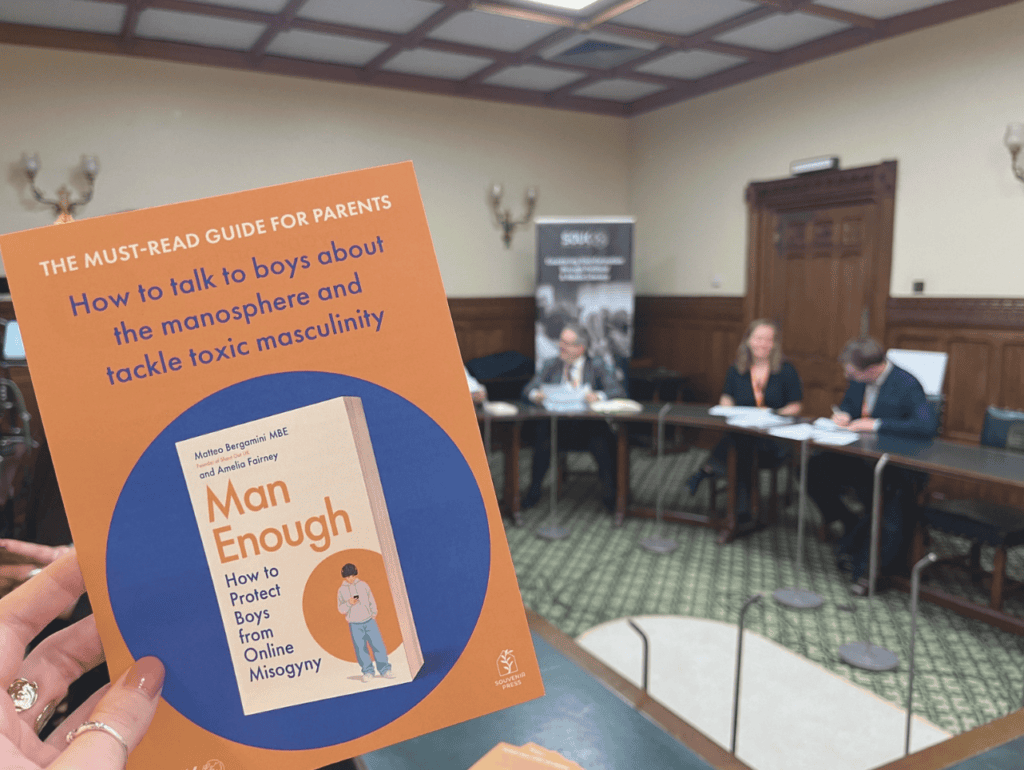
This Tuesday, I had the privilege of attending an All-Party Parliamentary Group (APPG) meeting in the Houses of Parliament. As the secretariat to the APPG on Political and Media Literacy, Shout Out UK (SOUK) organized a joint meeting with the APPG on Men and Boys’ Issues to discuss tackling online misogyny, holding tech platforms accountable, and supporting young people navigating digital spaces. But it became apparent very quickly that something was wrong.
The goal of the panel was to provide research and resources to counter growing online misogyny. Before me sat parliamentarians, experts, and academics committed to snuffing out toxic online environments. The knowledge and testimonies they had to offer astounded me—and the rest of the audience. With every seat filled, audience members sat pressed along the wall or shyly at the round table in the room’s center. And even so, the room was void of the people we sought to reach.
One man showed up to the meeting, a meeting clearly marketed as a session on men and boys’ mental health in online spaces. No matter how engaged, how readily mobilized, every voice of agreement or support coming from the room was female.
Matteo Bergamini, founder of SOUK, did not shy away from the subject. He prompted us to look around, to see what was missing. The attendees, all leading the charge for men’s mental health and safer online spaces, were overwhelmingly non-male. He asked whether or not this was telling of men’s dedication to their own social issues. Shortly after he posed the topic to the room, the only male attendee covered his face, then slipped out. I captured his concealed face on my veteran digital camera, which made occasional spasming noises as it overheated in my lap.
Matteo’s question reverberated through my mind and through every conversation that was to follow. Where were the parliamentarians that so vehemently voiced their support of our organization’s battles, the ones who denounced the growing safety concerns posed to women online and offline? Scrolling through our social media channels, I’m faced with similar questions.
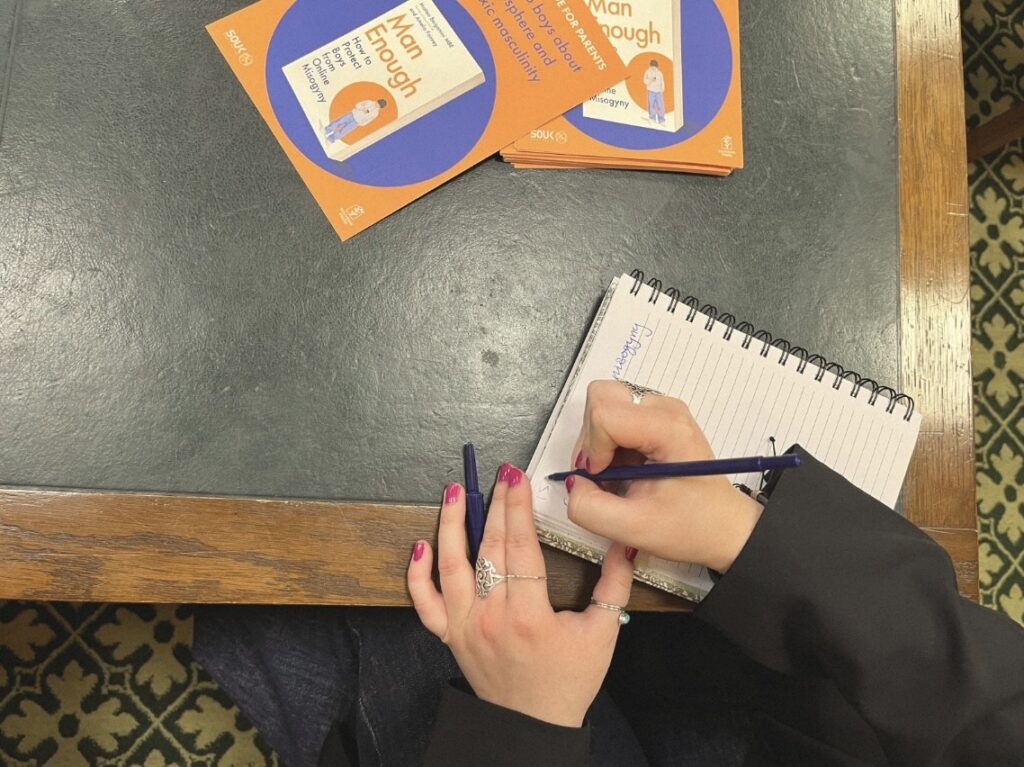
Last month, Matteo and co-author Amelia Fairney, Head of Communications and my supervisor at SOUK, published Man Enough: How to Protect Boys from Online Misogyny. The book, which I’m grateful to help promote, tackles the rampant exploitation of boys on the internet, which comes at the expense of women and girls. Marketing such a topic online comes with obvious struggles. Social media is the home territory of the incels and exploitative influencers the book seeks to expose. And when related content reaches affected audiences, they dismiss the information they need most as anti-male propaganda. Sometimes, comments sections feel eerily similar to that room in the Houses of Parliament. When we do receive male engagement, it leaves much to be desired.
“Of course it’s the same narrative as always,” a comment from a radio interview reads, “‘boys are bad and evil, women are good and perpetual victims of boys.’”
Within the interview itself, Amelia made a point to shift blame away from young men and toward the social media algorithm, the opposite of what his comment implies: “We want to move away from the demonization of boys.”
Matteo, in an interview with Sky News, elaborated, saying, “One of the things we often highlight in the book is that boys are victims, too.”
As parents, Matteo and Amelia wrote Man Enough to support and guide boys and their caretakers through a dangerous online sphere that seeks to manipulate. The word “prebunking” is often employed in the office to describe that kind of work.
“If you’re debunking,” Matteo explained, “you’re already too late.”
From the comments I filtered through daily on our social media posts, I learned just how true this was. A few days ago, we received the following from a viewer:
“What if some of the narratives that these boys are ostensibly ‘falling for’ are true?”
If messages of the manosphere are already so deeply ingrained in victims, what approach is required to help them? Or is there simply no way to reach someone who doesn’t want to be reached?
No one on the SOUK team would resign themselves to the latter, which is why there’s no better place for me to learn. For my return to the States, I’ll need all the training I can get.
Five months is a long—or frighteningly short—time.

More from this Author
-

Pants
Never tell a Brit you like their pants. And some of them wear really nice ones. Corduroy has come back in style. Autumn
-
Windows
On the far side of my room, about a foot from my heels where they dangle off the edge of my mattress, is
-
What You Need to Know
Bombs. Bombs. War. Natural disaster. Tear gas. Bombs. Natural disaster. Giant flaming building. Rocket ship. Protests. Luigi Mangione. Celebrities. Celebrities. TikTok. All of



Ready to Travel?
Are you curious and ready to dream big? Do you desire to challenge yourself and make a meaningful difference? Become a Lumos Traveler - let’s get you started!