The Languages of Lumos
The Bi-Weekly Guatemalan Phrase:

The Bi-Weekly Guatemalan Phrase:
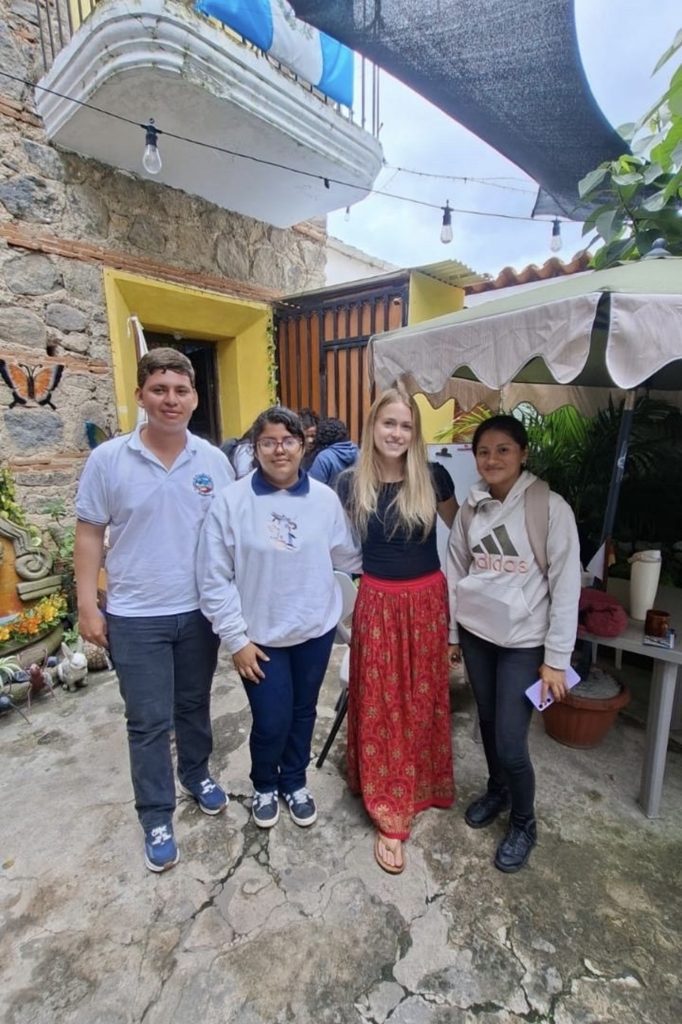
When I moved to Guatemala, I knew I would be learning a new language. After all, part of my daily routine here involves sitting down with my Spanish teacher and trying to remember whether to conjugate in the preterite or imperfect tense.
What I didn’t anticipate was just how many languages I would be learning at once.
Over the past two months, my days have become a rather interesting combination of Spanish lessons, MCAT studying, and helping establish permanent medical resources. At first glance, these three things might not seem to have much in common. But recently, I’ve realized that each has required me to become a beginner again, and each is teaching me something far beyond the subject itself.
The Language of Spanish
Most mornings, I sit down for Spanish lessons at La Unión, the school that has become my home here in Antigua.
Some days, I walk away feeling like tomorrow I’ll be fluent. Other days, I forget a word I’ve used a hundred times or confidently conjugate a verb into a tense that probably doesn’t exist.
Studying Spanish has been humbling, to say the least.
But I’ve also discovered that learning a language is about so much more than memorizing verbs. It’s about laughing at a joke without needing someone to translate it. It’s about building relationships with people whose lives might otherwise never intersect with mine. The more Spanish I learn, the more I realize how much I have yet to learn. And strangely enough, that has become one of my favorite parts of living here.
The Language of Medicine
When I’m not practicing Spanish or working with my partner organizations, there’s a good chance you’ll find me sitting in a café with my laptop, my Anki remote, and a stack of MCAT Kaplan books.
As I prepare to apply to medical school, studying for the MCAT has become another part of my everyday life in Guatemala. And in many ways, it feels like learning an entirely different language.
Instead of verb conjugations, I’m learning to interpret scientific passages filled with unfamiliar terminology and structure. Some days, I feel like I’m finally beginning to understand the language of the MCAT. Other days, a single chemistry question reminds me just how much I still have to learn.
It’s a strange experience to spend one part of my day learning how to communicate in Spanish and another learning how to communicate in the language of science.
But I’ve been reminded that understanding something doesn’t happen overnight. It takes repetition, patience, and a willingness to get things wrong before getting them right. For me, it’s about getting comfortable being uncomfortable.
The Language of Building a Clinic
Of all the languages I’ve been learning, this one has been the most unexpected.
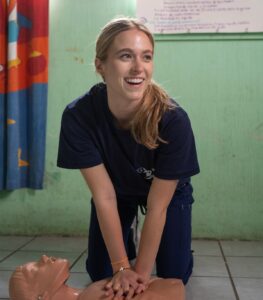
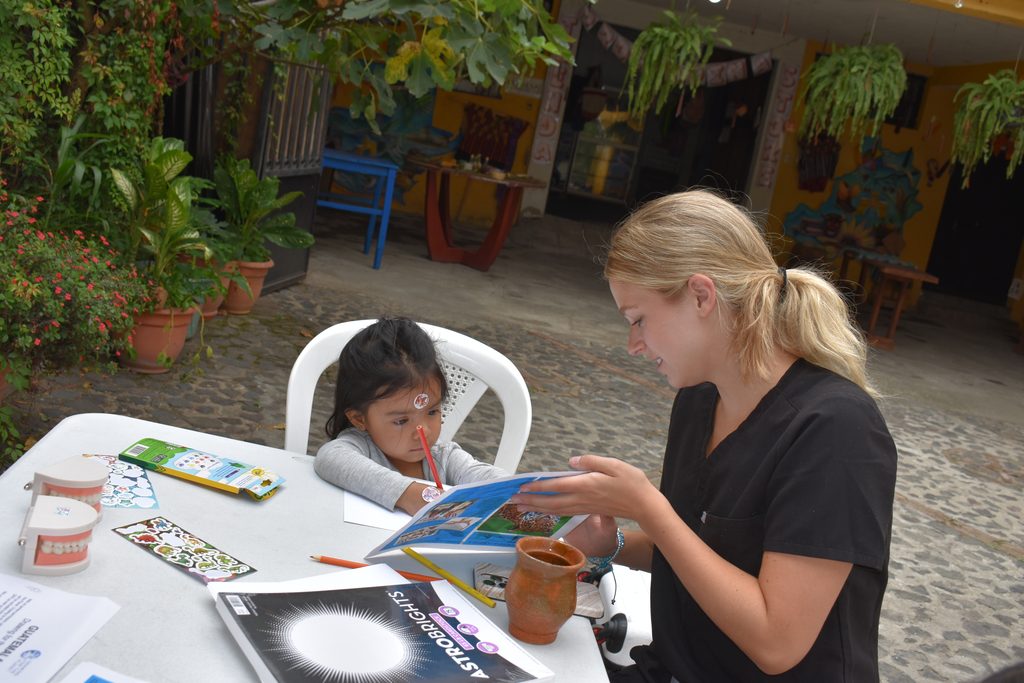
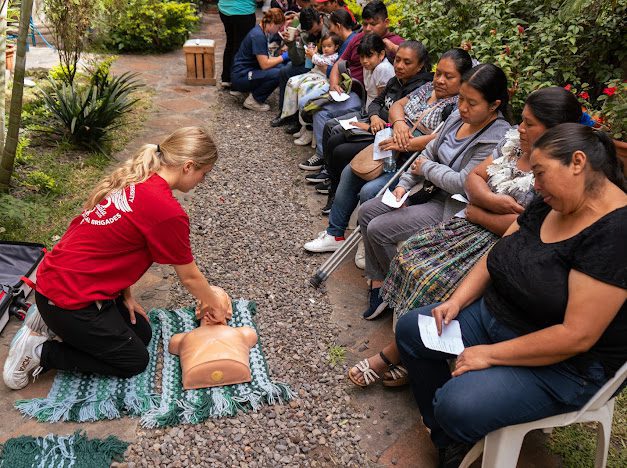
A few weeks ago, I was invited to help establish a permanent medical clinic through ProChapina, a nonprofit organization partnered with La Unión that serves women and families in Guatemala.
What began as an opportunity to volunteer has quickly grown into one of the most meaningful parts of my time here. As the clinic’s medical and volunteer coordinator, I’ve found myself navigating a world that I never imagined at 22 years old. Unlike Spanish or biochemistry, there isn’t exactly a textbook I can open to learn how to build a medical clinic. Instead, I’m learning through conversations, mistakes, problem-solving, and the generosity of people who have welcomed me here. I’m learning that healthcare requires far more than medical knowledge. It requires organization, trust, cultural understanding, and the ability to work alongside people with different backgrounds and experiences.
I’m also learning that leadership doesn’t necessarily mean having all the answers. Sometimes, it means asking the right questions, and listening to the people who know the community best.
The Language That Connects Them All
Somewhere between Spanish lessons, MCAT practice questions, and clinic preparations, I’ve begun to recognize a common thread.
All three have required me to embrace being uncomfortable.
I’ve had to ask people to repeat themselves. I’ve gotten practice questions wrong. I’ve encountered problems at the clinic that I didn’t immediately know how to solve. And in each of those moments, I’ve been reminded that growth rarely happens when we already know exactly what we’re doing.
When I first came to Guatemala, I imagined that much of my learning would happen through the work I came here to do. I expected to gain experience in global health, learn Spanish fluently, and serve communities. Those things are happening, but so is something I didn’t necessarily plan for. I’m learning how to be a beginner again, how to listen before speaking, and how to ask for help without hesitation.
And perhaps that’s the most important language I’m learning here: the language of humanity.
I don’t know whether I’ll ever feel completely fluent in Spanish, MCAT passages, or the complicated process of establishing a medical clinic. But I’m beginning to understand that fluency shouldn’t be my goal. Showing up should be.
Because if there’s one thing Guatemala has taught me so far, it’s that you don’t have to speak a language perfectly to make a meaningful difference.
Welcome to Ella’s Bi-Weekly Spanish Lesson Guatemalan Phrase of the Week… “Púchica” = Wow When I imagined spending several months in Guatemala, I
I came to Guatemala with a plan. I had spent months thinking about what I wanted my Lumos project to look like, gathering
Hello Lumos community! I have been on the ground in Antigua, Guatemala for two weeks now. It’s usually about this time, the two-week
Are you curious and ready to dream big? Do you desire to challenge yourself and make a meaningful difference? Become a Lumos Traveler - let’s get you started!