
Kenya in the Cultural Context
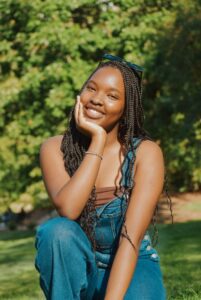
I think I am finally getting comfortable. Not comfortable in the sense that everything feels familiar, because trust me, I am still learning something new almost every day, but comfortable enough that I am beginning to find a rhythm here. When I first arrived, I felt like I was constantly taking in new information, people, places, routines, and ways of understanding the community around me. Now, I am starting to recognize people and places, ask better questions, and make connections between what I am experiencing and the work I came here to do. One of those moments came when I had the opportunity to attend a traditional Maasai wedding, dressed for the occasion in traditional jewelry and a leso. I remember looking at myself and having one of those little moments of, Wow, I am really here!
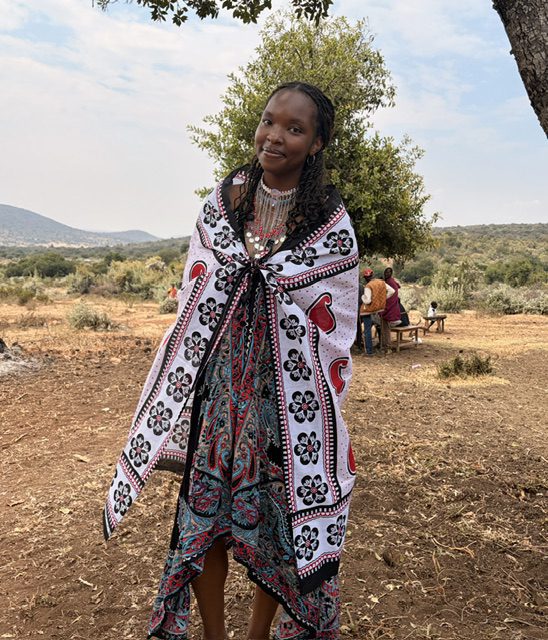
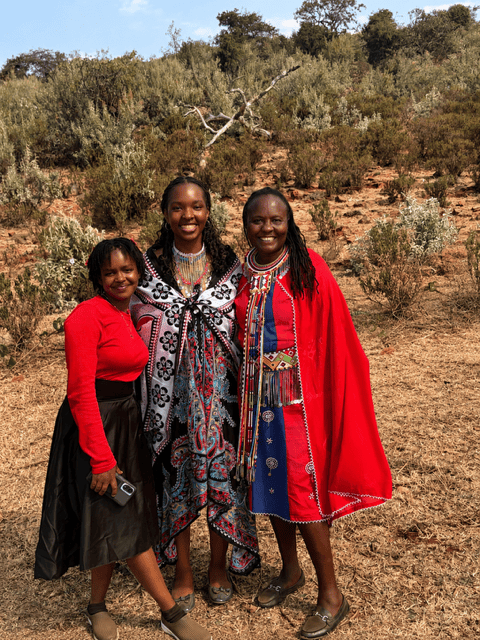
There is such a difference between learning about a culture and actually being invited to experience it. There was so much happening around me at the wedding, from the clothing and jewelry to the singing, movement, celebration, and traditions I was still trying to understand in real time. I am learning that cultural immersion does not mean I have to immediately understand everything I experience. Sometimes I simply get to be present, observe, ask questions, and appreciate being welcomed into a moment that was not created for me. At the same time, immersion has also meant understanding that no community can be defined by one experience. There is beauty, celebration, and tradition, but there are also complicated realities that I am only beginning to understand. Some of my most meaningful learning has come from learning how to hold both, especially through my relationships with the Isiankikin young ladies.
Over the past few weeks, I have become more involved in planning our discussion topics and creating a timeline for our conversations. This week, our discussions turned toward money and the challenges some of the ladies experience because of financial dependence on their husbands. Listening to them made me think more deeply about what we actually mean when we use a word like “empowerment.” We can encourage women to advocate for themselves, make decisions, and imagine different possibilities for their futures, but those choices become much more complicated when someone does not have independent access to income. It reminded me that knowledge is important, but knowledge alone cannot remove every structural barrier a person faces.
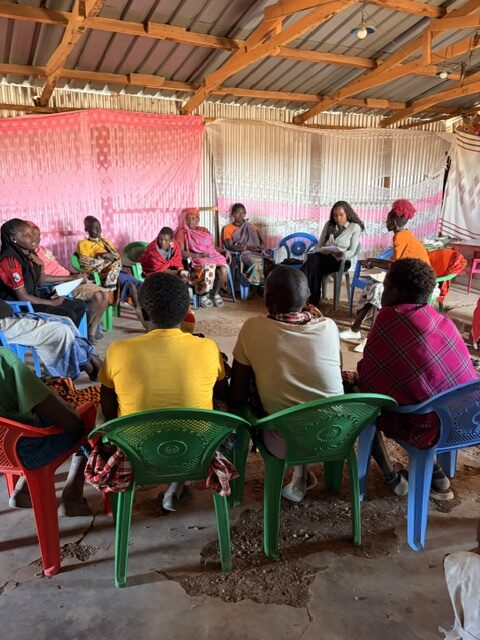
What I value most about these discussions is that they are teaching me to listen before trying to find a solution. I do not want to hear a challenge and immediately assume I know the answer. Instead, I have started thinking about how Shakenisho could help create opportunities for the ladies themselves to identify income-generating activities that make sense for their lives. That idea has slowly moved from conversation into something more tangible, and unexpectedly, it has led me into an entirely new skill: grant writing. I am learning how much thought exists between recognizing a need and actually developing a program that could respond to it. More importantly, I am learning that a good proposal should not begin with what I think would make an interesting project. It should begin with listening.
This process has also given me a much greater appreciation for the administrative side of Shakenisho. I have been helping the organization think about how it tells its story digitally, particularly through its website. The more time I spend behind the scenes, the more I realize that community work does not end when the discussion group or field visit is over. Someone has to manage the records, track the programs, communicate the impact, write the proposals, maintain relationships with supporters, and explain why the work matters. These are the parts of community work that people may never see, but without them, sustaining the visible work becomes incredibly difficult.
Working on Shakenisho’s digital story has especially made me think about the relationship between impact and storytelling. Shakenisho has years of history within these communities, and I am beginning to see how important it is for that history and impact to be communicated in a way that reflects what is actually happening on the ground. A website might seem small compared to sitting in a community discussion or visiting a village, but it can become a bridge between the work happening here and someone on the other side of the world who may want to support it. Learning how to communicate that work responsibly, without reducing a community to its needs or struggles, has become another unexpected part of what I am learning here.
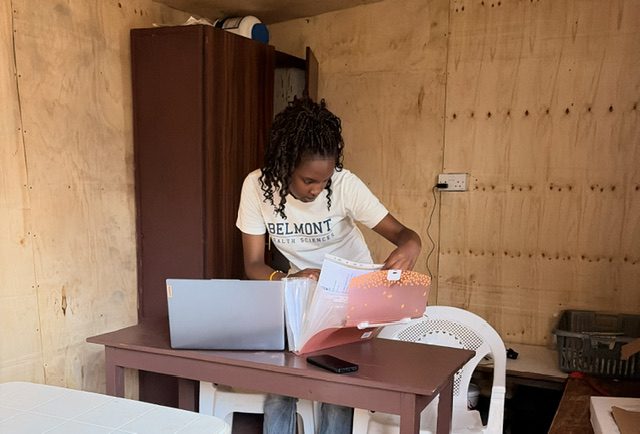
The more involved I become, the more I realize that the different pieces of my fellowship are not as separate as I originally thought. The conversations I have in the community influence the ideas I bring back to the office. Listening helps identify a need. Program planning helps us think about a response. Grant writing can help connect that response to resources. Administrative systems help sustain the work, and storytelling allows other people to understand why it matters. I came here expecting most of my learning to happen out in the field, but I am realizing that some of my biggest lessons are happening in the space between the community and the systems that support it.
When I first arrived, I was mostly asking, What does Shakenisho do? Now, I find myself asking, What does Shakenisho need in order to keep doing it, and where can I be useful? I think I am slowly finding my answer. For the remainder of my time here, I want to invest more deeply in my work with the Isiankikin young ladies while continuing to develop proposals, strengthen Shakenisho’s digital storytelling, and better understand the systems that allow grassroots community work to continue. I am still learning as I go, and I know my understanding will continue to change the longer I am here. But I am beginning to understand that meaningful action does not always start with having an answer. Sometimes, it starts with being present, listening long enough, and learning to ask a better question.
More from this Author
-

Somewhere Between Here and Home
Somehow, I have found myself at the halfway point of my fellowship. It feels like just yesterday I was packing my bags, preparing
-
Another Part of the Story
Over the past few weeks, I have spent more of my time visiting schools around Narosura. With harvest season still happening, we decided
-
Harvest Season
One thing I am learning about community work is that sometimes you have to know when to slow down. Over the past few
Ready to Travel?
Are you curious and ready to dream big? Do you desire to challenge yourself and make a meaningful difference? Become a Lumos Traveler - let’s get you started!