Category Archives: Uncategorized

Lessons learned

For today’s blog, I wanted to take a different route. A friend recently asked me what I’ve been learning since I arrived here, and after some reflection, I thought it would be nice to share a few lessons from my time so far.

  1. Give Yourself Grace

What most people don’t know is that since coming here, I’ve been sick three times in just two months, and it really took a toll on my mental health. Every time I thought things were finally going well, I’d end up sick again. I felt discouraged, hopeless, and confused. Eventually, I realized that my body was simply having a hard time adjusting to the new climate and that it can sometimes take up to a year to fully acclimate to a new environment. Learning this helped me shift my mindset. This journey isn’t a race for the swiftest, but for those who endure. Being kind to myself has been one of the hardest but most necessary lessons as I build a new life in a completely different country.

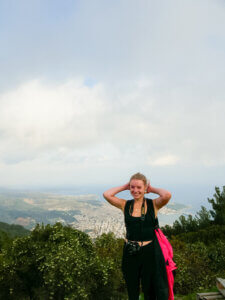
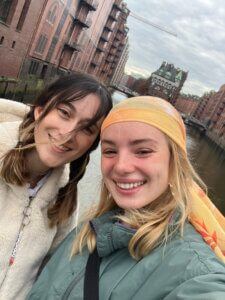
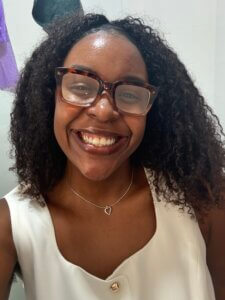
quick selfie before church 🙂


2. Prioritize Rest

It’s so easy to get caught up in the busyness of my project that I sometimes forget to pause and breathe. I would jump from one task to another without realizing how drained I was until the weekend hit. I’ve learned that rest isn’t a sign of weakness; it’s a sign of discipline. Taking time to recharge and acknowledging when you need a break is vital if you want to produce meaningful work and show up fully for others. Rest also communicates trust, a reminder that it’s okay to let go and allow the One above to work things out.

Rest doesn’t always mean taking a nap. Sometimes it’s simply being intentional about doing things that bring peace after a long day of meaningful work.

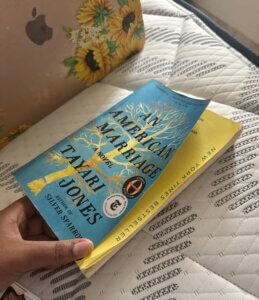
Book I read for October


  1. The World Is a Bigger Classroom

Living in the Dominican Republic has taught me invaluable lessons – ones no classroom could ever offer. This experience has shown me that the world itself is a vast and beautiful classroom, full of wisdom waiting to be discovered. Approaching this journey as a student has made me more curious, empathetic, and open-hearted. It’s deepened my love for people and sparked a hunger to see and understand more of the world God created.

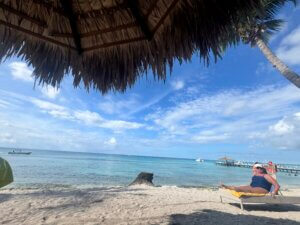
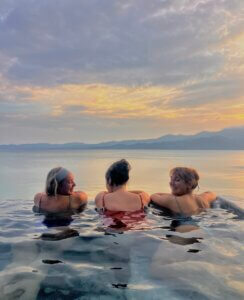
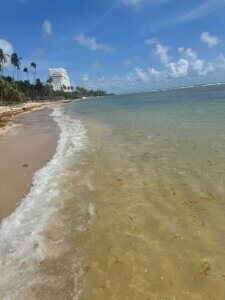
This was my first time going to the beach since I’ve been here.

4. We were created for community

As I’ve mentioned before, I’ve battled with loneliness since being here. In some ways, I tried to convince myself that isolation was what I needed in this season, but deep down, I knew that wasn’t true. Leaning into community, both near and far, has allowed me to land softly in spaces that make me feel seen, loved, heard, and safe. Community will carry you when you can’t carry yourself. It will speak life into you when your own words fall short. I truly believe that I am where I am today because of the people who have surrounded me. Their presence reminds me that I don’t have to do this alone. It’s because of the community that I’ve been able to endure the harder moments of this journey and even find beauty in them.

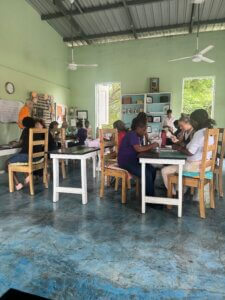
Some doctors and nurses visited the workshop and hosted a medical clinic for the women.

5. Remember your why

We hear this one often, but there’s something powerful about being in moments that feel impossible when the only thing keeping you grounded is remembering why you’re here. Holding on to my why has made me a better leader, friend, student, and person. I’ve been given the privilege of impacting lives, even if only for a short span of six months, and that is something I never want to take for granted. The women I work with deserve to know me when my cup is full. Remembering my why helps me refill it to challenge my own beliefs, get back up when I fall, and humbly admit that I don’t have it all figured out.

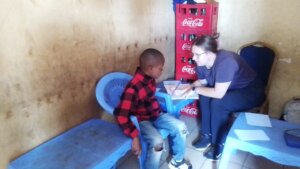
Teaching Math to our youngest rescue.


Do not be anxious about anything, but in every situation, by prayer and petition, with thanksgiving, present your requests to God. And the peace of God, which transcends all understanding, will guard your hearts and your minds in Christ Jesus.

Phillippians 4:6-7

Week 8 and 9 – Complexities of Healthcare

Differences in Healthcare

The San Ignacio Community Hospital has opened my eyes to many things. Particularly the differences in medical cases, the past couple of months have involved a continuing rise in dengue cases which is due to contamination in closed spaces. Cases range from mild to severe, however, I have seen more mild cases come into the hospital that are able to recover in a few weeks time. The doctors have asked me whether viral infections are carried in a similar fashion as being mosquito-driven back in Tennessee and I have had to explain that it is a tropical occurrence rather than widespread. It is eye opening to see how location and being in a tropical climate creates the risk of exposure to viruses in such a different way through a mosquito host.

Amputations

I have also continued to see many patients in need of amputation referrals. Due to poor hygiene and lack of sterilization, many of miniscule wounds become an infection site that continue to spread until the wound needs amputation. Patients at times come into the hospital for wound cleaning and sterilization that is offered on a weekly basis. However, some patients that do not care for wounds properly or come into the hospital. Although I believe educational material could help this issue with infection sights, many doctors associate limb amputation with the saturation of diabetes patients in the country.

Overarching Healthcare due to Belizean Economy

An evident difference is that public healthcare in Belize is a lifeline for all diagnoses. Whereas in America we are referred to specialist physicians for more specialized care, public healthcare in Belize is free of charge and serves as primary care in many specialty areas. One of our patients this week had a metal shard in his eye for a week, experiencing continued pain and redness. Instead of sending the patient to an ophthalmologist, the attending doctor asked for my assistance on dissecting the metal shard from the cornea. This practice was a surprise to me, but I was happy to see the patient’s relief upon the metal shard being taken away from his eye. Patient care like this is often seen from general doctors as many patients that seek healthcare from public entities do not have the funds to pay for a private practice.

Iguana Conservation Project

During the weekend I was able to visit the Iguana Conservation Project located in San Ignacio. The reason for this center is to protect and conserve endangered species. The center has take in Iguanas with injuries that can no longer survive in the wild as well as mates that produce eggs at the center and are later taken back into the wild. An interesting thing I learned from our guide was the change in tail pattern iguanas have when their tail is cut off and it regrows (the pattern is no longer the same and appears darker).  I was able to hold baby iguanas and older iguanas at the center. Surprisingly, if you hold out leaves to an iguana, they will rapidly eat it a lot faster that I thought!


a change of scenery

Hola desde Valparaíso!

My view while writing this post looks a little bit different than normal because I’m currently in Chile for a quick trip and change of scenery! Since Mendoza is right on the border – a quick 4 hour drive through the Andes Mountains – it’s very common for Argentinians to travel to Chile frequently. So, my friends and I decided to take a weekend trip so that I can see and experience a new country & take part in all the aspects of a normal life here in Argentina 🙂 

Although we were just here for the weekend, we have been able to see and experience so many cool places and have taken advantage of all of the fun tourist spots in the city. Valparaiso is a fun, port city on the coast of the Pacific Ocean full of vibrant colors and beautiful murals, creating the perfect combination of artistic spirit and maritime vibes! Basically, the city is filled with the best artwork and best seafood I have ever experienced! 

We really have been making the most of our time here & had a day full of fun activities! We started the day at the most warm and inviting cafe – truly one of my new favorite places on this earth. We went early in the morning, so we were some of the only people there, and the lady that owns the cafe welcomed us with open arms, sat and chatted with us at our table, then let us choose from a buffet filled with homemade pastries, jams, breads, and more! She truly embodied perfectly the warm and inviting atmosphere that is what draws me to this part of the world. After our breakfast, we headed to the main area of downtown where we stopped in a beautiful art gallery and visited the main port area. We also wandered to a famous poet’s house, Pablo Neruda, where we took a tour and learned about his history as a writer and Nobel Prize winner. It has the most breathtaking views of the city and ocean, and was so cool to walk through and see the history of the city. We spent the rest of the day walking through the hilly streets of Valparaiso, riding on the ascensores (elevators) scattered throughout to be able to see all of the views, and popping in and out of local souvenir shops, artisan stores, and (of course) local cafes. We ended the night at a fresh seafood restaurant, which was absolutely delicious, and enjoyed the sunset from the patio view. It was a busy, but fun way to explore a new city and experience more that new countries have to offer. 

Taking this trip reminded me of how cool of an opportunity I have right now to learn more about the world and see it with my own eyes. I’m very aware of how much of a privilege it is to be where I am right now, and am so thankful to each and every person who made it possible. I can’t wait to share more! 

With love, Sarah
 

Week 9 and 10: Celebrations, Illness, and Cold Weather

Kalimera friends! The last two weeks have been less chaotic than usual… mainly because I have been sick. Today I am writing this as a dinner that I am hosting tonight simmers on the stove, so my little old house smells like garlic, mushroom, and onion (yummy). October 28 is a big holiday here in Greece known as Ohi Day. 

Ohi Day celebrates the day that the Greek government said “No” to the fascist occupation of Greece and joined World War II on the side of the Allies. They celebrate by having large military parades in the streets. This morning I went for a long swim (it was cold), and when I got out they were out with their trumpets, ready to begin the parade. 

Tonight is my current roommate’s last night in the house, so we will be having some friends over to have dinner in our courtyard (as it may be one of the last sunny days for a while). I believe I’ve talked about this in my past blog posts, but an unfortunate part of living on an island of transit is that you say A LOT of goodbyes. A part of me is getting used to it, but another part of me still struggles with getting so close to someone only to have to say goodbye again. 

In other news, I had to take a few days off last week because I have been sick, so my project is moving a bit slowly. And although being sick and having to miss out on activities SUCKED, it was nice to have such a lovely community of people reaching out to make sure I was okay. That being said, the combination of being sick and the shift in the weather has been making me feel a bit homesick, so I have been trying to come up with fun activities to make me feel better. And of course, going for swims and getting out in nature has been a part of that. 

For the last bit of this blog post, I wanted to talk about some aspects of Greek culture that I have found interesting… 

  1. It is a very matriarchal culture. Women are often powerful figures, own their own businesses and homes, and if they are in a relationship (whether that be married or have a boyfriend) they often don’t bring it up. 
  2. Community culture, even as the weather gets colder, the community is much closer knit. Rather than going straight home after work, people will be going to the cafe to grab a coffee with friends. It’s almost impossible for me to walk home without seeing someone I know. 
  3. The Spanish siesta… but times 10. From the hours of 2 p.m. to 6 p.m. almost nothing is open. People go home, they rest, take a long lunch, and then don’t head back to work until 6 (although they do often work far into the evening… I can hear the music from the cafe’s in my room until 3 a.m. even on weekdays). 
  4. Greek Maybe Time – as in “Maybe it will happen, maybe it won’t”. I’d heard this as a joke but it is so true. Timeliness just isn’t a thing here. And as someone who is chronically tardy, I love it. 

Anyways, I hope you enjoyed this chill little blog post. Stay tuned for my next one though, big things in the works 🙂

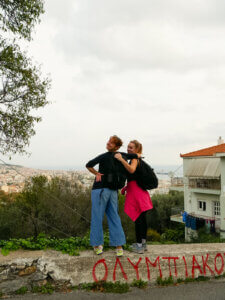
Attached are some photos from the past two weeks… although I don’t have much. 

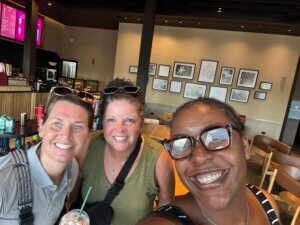
Group photo of the team at Lesvos Solidarity

Getting some work done at a cafe

Had the loveliest evening at an event commemorating the history of the crisis on Lesvos

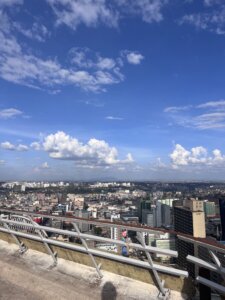
Medical Camp and Political Demonstrations

After reporting to you all that I had found myself settled into a consistent daily routine, last week took quite a few unexpected turns. What started as a normal week turned into working in a medical camp and ended with being confined to my apartment for 3 days due to riots and protests throughout the city.

The first half of the week was business as usual, I spent Monday and Tuesday working in my normal clinic. On Tuesday, I was informed of a medical camp occurring in the area that needed additional volunteers so, I would be spending the rest of my week there. I was so excited to get the opportunity to break my routine and learn in a new environment. Medical camps regularly occur in Kibera and are lead by various international and local organizations with the goal of providing ample free primary care and medications to the people here who may not seek care otherwise. I was particularly excited to take part in this camp because I know that I will travel to a village in December to participate in a camp led by UCESCO. I know that seeing how this camp is run will help me be a better volunteer and leader at the one in December.

In the car Wednesday morning, there was talk over the radio of a former Kenyan political leader passing away from old age but, in lieu of my excitement for the day, I didn’t think much of it at the time. I cannot describe truly how amazing working in the medical camp was. When I arrived, I discovered that it was run by a Christian non-profit based in Gainsville, Georgia and the team leading it were doctors and nurses all from the Southeast. Shockingly, the nurse practitioner with them lives in a neighboring town to my hometown! We both couldn’t get over how wild it is that we live within 20 miles of each other and frequent some of the same restaurants at home and met thousands of miles away in Nairobi. It was certainly serendipitous and, to be completely honest, after nearly three months here, I would be lying if I said I wasn’t cathartic to see and talk to people from home.

The camp was set up in a church, and they had areas marked off as a waiting and reception area, examination rooms, an optometry station, and a pharmacy. When patients arrived, they were given a card that acted as their “chart,” and directed through the various stations on a first-come-first-serve basis. The sponsoring organization brought many prescription and OTC medications to treat both acute and chronic conditions. Throughout the day, I worked with the doctor as he saw and evaluated patients and decided on the best course of treatment. Typically, he took their history, did a brief physical exam if needed, and prescribed them medication to be picked up at the pharmacy. We also worked with a local clinician who aided in patient care and language translation. Over the course of the day, the camp treated a few hundred patients with the most common conditions being gastritis and respiratory infections. It was a truly fantastic day and I was so excited to continue to work with them over the rest of the week.

However, the powers that be had different plans for us. I first grew apprehensive of the situation when one of the other non-medical volunteers arrived to join me in working at the medical camp when she was meant to be at one of the schools in the area. She explained that, due to the above mentioned passing of the political figure, there were riots and demonstrations of public mourning throughout Kibera and the rest of the city and it was no longer safe for her to be at that school. She arrived in the early afternoon, and, throughout the rest of the day, we could hear the demonstrations on the main road. Please know that the medical camp was safe as, it was in a gated church compound with security. We ended up leaving the camp earlier than anticipated during an apparent break in the demonstrations when we knew it would be safe for us to walk to an area to get a car to go home.

The response to Raila Odinga’s death throughout the city and the whole country is something I never could have imagined or anticipated. He was a symbol of political unity for Kenyans and was a beloved figure to people from all sides of the political aisle. Demonstrations of public mourning continued and intensified throughout the day on Thursday and we were instructed to not leave the apartment. We kept our TV on the news most of the day and watched as thousands of mourners first breached the security at the airport to meet the plane carrying his body and then marched through the city to the sports arena where he lay in state. We watched as crowds in the arena became larger and more unstable and as police in the arena took the disproportionate response of using tear gas and lethal force to clear out the crowd. Over the course of the day, as mourners attempted to gather and view the body, the police killed at least 3 people.

While everything remained normal in the area surrounding our apartment, we knew from the news coverage that the areas between the airport and the arena and downtown were not stable. Friday and Saturday were much the same and everything seemed to calm down and go back to normal by Sunday. On Monday, the day after the funeral and burial and a public holiday, we feared protests for the people killed by the police, but they did not seem to come to fruition. On Tuesday, everyone returned to work and we were able to return to our projects. While I was disappointed to miss the remainder of the medical camp, I do think this was an important lesson on Kenyan culture, particularly on how revered and important post-independence political figures are to the people here. It was also a prime example of how, despite Kenya not having a culture that normalizes violence, as with anywhere in the world, select groups of people will use opportunities such as this to incite division and violence.

After an admittedly boring few days in the apartment, this week I returned to my normal post at the clinic and attended the grade 6 and preschool graduation of the primary school UCESCO supports. I am doing well and more updates to come! Enjoy these few random photos from the past few weeks!

With Karen in the city center!

Preschool graduation!

Breakfast and reading on the balcony this morning

Trusting the Process

I’ve lost count of how many weeks have flown by—somehow, we’re already nearing the end of October. It feels surreal to realize I’m heading into yet another month in San Pedro. Even after almost two months here, I feel like I’ve only just begun to scratch the surface of what life is truly like in this place.

These past two weeks have been a rollercoaster—filled with both challenges and moments of joy. I’ve been sick for the second time since arriving, and it’s been strange how much my body continues to struggle adjusting to the environment. I thought it would be similar to home, but it hasn’t been.

Here in San Pedro, we often experience daily power outages. The heat is intense—draining, really—and it’s left me constantly dehydrated and physically exhausted. Some days, it takes a real toll on me mentally, emotionally, and physically. I’ve had moments where I don’t quite feel like myself, and that’s been hard.

These struggles have also led me to reflect on healthcare here. Through conversations with Dominicans living in San Pedro, I’ve learned that the local healthcare system is deeply flawed. Many doctors don’t take time to explain diagnoses or build relationships with patients, and some even perform surgeries without fully understanding the patient’s condition. It’s unsettling. Knowing that the nearest reliable hospital is in the capital—over an hour away—sometimes fills me with fear. I feel grateful that back home, access to quality healthcare is something I can count on, but here, many people don’t have that privilege or even know what that would look like.

On a lighter note, I recently went to my first baseball game here, and it was such a fun experience! San Pedro’s team, the Estrellas (Stars), played against the Leones (Lions) of Santo Domingo. I didn’t grow up watching sports, so I came in with little knowledge, but I’ve quickly learned that Dominicans are passionate about baseball. I was surprised to find out how many Dominican players go on to play in the MLB. It’s such a serious pursuit here that some young people even drop out of school to train full-time, hoping to go pro and lift their families out of poverty.

The energy at the game was electric. At first, it was pretty chill—the Estrellas were in the lead—but as the Lions started catching up, the whole stadium came alive. Fans were on their feet, the tension was high, and every home run brought an eruption of joy: drums beating, music playing, people dancing and cheering. I loved seeing how sports can bring people together and create such a powerful sense of community. It truly filled me with joy. My boss and I are now thinking about taking the women from the workshop to a game, and I’m really looking forward to sharing that experience with them.

The Estrellas’ team mascot. The teams’ colors hare Green, White, Pink and Black

As I continue my time here in San Pedro, I’m learning that this experience is as much about personal growth as it is about cultural immersion. The challenges—physical, emotional, and environmental—have stretched me in ways I didn’t expect, but they’ve also deepened my empathy and appreciation for the resilience of the people around me. Moments of joy, like the baseball game, remind me that even amid difficulty, there is always space for connection, celebration, and community. I know there is still so much more to learn and experience here, and while it hasn’t always been easy, I’m grateful for every piece of it.

because you know that the testing of your faith produces perseverance. Let perseverance finish its work so that you may be mature and complete, not lacking anything.” James 1:3-4

My boss enjoying her lolipop.

Picture of the field.


travel with purpose

Hola, hola! I’m excited to share an update this week, as it has been filled with a lot of exciting things! The past 2 weeks have been busy – welcoming a group of entrepreneurs here from different parts of the country to help them grow their businesses, connecting with the entrepreneur landscape all over the city, spending quality time sharing meals and stories, teaching new skills, empowering new communities, celebrating successes, and taking every opportunity to learn and grow. 

Before I get ahead of myself, I think it’s important to include a little bit of context first. For those who don’t know me, I have spent the last few years of my college career working with a nonprofit organization that serves latino immigrant communities in Nashville, as well as under-resourced communities in Mexico. This gave me the opportunity to regularly travel abroad, which is where my passion for international work first began. For most people, these “work trips to Mexico” looked very different in their imagination than they were in my reality. I worked in a tiny, desert border-town where the majority of the small population lacked basic necessities. However, to this day, that tiny desert town holds some of my favorite moments, memories, and relationships. It’s the place that gave me the desire to travel the world in a way that most people don’t want to. Rather than seeing the most amazing tourist attractions and staying at the fanciest hotel, I strive to visit these small communities to serve their biggest needs, because that’s where I believe the true heart of a country and its culture lives. This simple desire would eventually become the inspiration behind moving here to pursue this Lumos project. 

This week I had the opportunity to visit a community center that serves an under-resourced community here in Mendoza. This little community reminded me of that sweet desert town and reignited in me that passion and purpose behind this experience. In this community center, there are opportunities for women to create work for themselves through learning sewing skills and being given a platform to sell the products they are making to local hospitals, schools, and businesses. There are also opportunities for women to use culinary skills to make meals for kids in local schools and have income from these opportunities as well. Partnered with these job opportunities are education classes in the areas of reading, writing, and business. This community center is truly focused on equipping and empowering individuals through education and employment to be given opportunities that they wouldn’t otherwise have access to. It was amazing to see how this cycle plays out in this community, and how many people are working together to empower others. 

I’m excited to have the opportunity to continue working in this community and in these programs throughout my time here. I have been assigned a project that will continue to develop additional projects like these ones to create further opportunities to empower this community. This visit was such a cool experience to dream about the future and see the beginning stages of such a powerful and impactful opportunity.

With love, Sarah

Week 6 and 7 – Celebrations

The month of September marked a season of celebration in Belize! St. George’s Caye Day happened on September 10th which commemorates victory over Spaniard forces in 1798. During the ceremony I attended, they made sure to mention the joint effort between all those involved during this victory including British settlers and slaves. Shining light on the unity of Belize’s multicultural population. After the mayor’s speech in San Ignacio, a parade followed.
Social Work

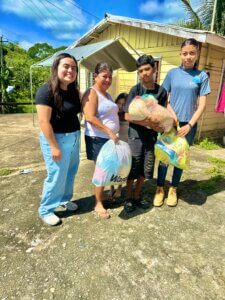
During the past couple of weeks I worked with social work. Social workers in Belize are separated by district. Since I live in San Ignacio, Belize- I am apart of the Cayo district. Mrs. Flowers is the social worker of my district and she was able to inform me about her work over the course of a week. Her work includes counseling domestic cases, teenage pregnancy, food insecurity, and her primary focus is HIV documentation and prevention. Whereas, HIV medication would likely be the concern of a physician in the USA, in Belize it is the responsibility of a social worker. Social workers here do routine check ins through phone calls, give refills, home visits, and even deliver medications in the city and go as far as the outer villages of Cayo in other for their patients to continue treatment.

We also had a conversation regarding food insecurity and how as a social worker, she petitions families in need to obtain aid from the Belizean government for groceries. However, she noted that even though she is a social worker, her paperwork is not always seen in a timely manner and there are often delays and setbacks in receiving funding. She expressed to me that if there was one thing she could do out of her career someday was to begin a foundation that targets food insecurity here in Belize. Despite her passion for this, she explained to me that beginning a program like that would not be self sustaining in the long run.

I joined the social worker and one of the managers on a mobile clinic day and was able to visit the homes of people who needed medications taken to their homes. Most of the time, people who need medications delivered are in need of transportation. Due to the economy in Belize it is often times difficult to travel distance due to the cost of transportation which limits locals access to resources. An important thing to note is that public healthcare exists and even medication to treat patients at these public facilities are free of charge, however, the financial hardships locals face make it hard to attain these resources.

Another challenge faced is trying to communicate with patients who are HIV positive and refuse treatment. Even though medicating HIV ahead of becoming AIDS can be life changing, many deny treatment. This is due to prevalent stigmas in regard to an HIV positive test and the risk of others finding out. I found this interesting as medication has the potential to exponentially lengthen someone’s life and stopping the progression of the disease.

Independence Day

September 21st marked independence day here in Belize. Interestingly enough, Belize was still part of British rule up until 1981. It is even more fascinating that when I first arrived to Belize at the beginning of August, the currency still had Queen Elizabeth II pictured and soon after my arrival the government began issuing new currency with new public figures. Although Belize is no longer a British colony, it seems that the country continues to acknowledge longstanding British rule and many locals live to tell their experience of political and economical change due to the independence gained in 1981.

During this celebration many locals hosted parties at their homes, attended the parade, and viewed fireworks as a community. I was able to watch the parade and even spotted some of my patients along the way! The sweet thing about living in such a close knit community is that even when I am not at the hospital, I see patients around town or even at church. During the parade a little boy ran up to me as he pointed me out to his mom saying “it’s the doctor!”

Although I never would’ve imagined it, I am slowly starting to become a familiar face in the community. To many in the San Ignacio community, I am now considered family.

Weeks 7 and 8: Cozying Up With Community

Ya friends! These past two weeks have been busy busy busy and (as per usual) it is so hard for me to summarize my time here in these short posts. Between my internship, my volunteering, and spending time with friends, it feels like I never have a rest, but in the best way possible.

Internship

presenting LESOL to faculty at the Metochi Monastery 

A large part of my work here has been adapting to the constantly changing nature of working with an NGO involved in refugee support. Laws are constantly changing, needs are constantly shifting, and with that my work is constantly changing. While, for the most part, the project I am doing here has remained relatively close to the project I set out to do, the role has definitely been a bit different than I imagined it to be.

The past few weeks I have been acting primarily as communications support. This has included editing videos for grant proposals, creating new social media content, writing advocacy content for our website, and lots of Shopify edits to better advertise our products.

In addition to that, last week I got to go on a little excursion with Lesvos Solidarity, where we presented our project to faculty of a potential university partner at a monastery in the hills of Greece (it was gorgeous... photos below)..

Community

Another realization that dawned on me today was that I found a community here. As I mentioned in one of my earlier posts, one of my top priorities when I arrived was finding a group of people that I could count on. Not just friends, but a true community.

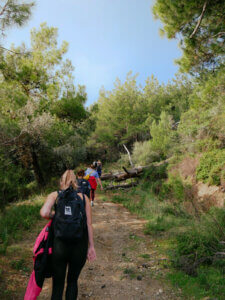
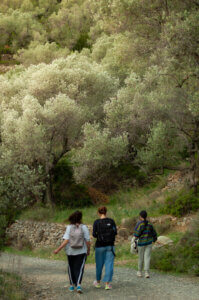
This past weekend I went camping (if you can’t tell by my past posts... I really, really enjoy camping). The weather was chilly but the people were incredible, as were the views. But the most beautiful part of the camping trip wasn’t even the night under the stars, or swimming in the sea in October, or the lovely taverna dinner we had on the way back the next day.  No, it was all the people asking me about my camping trip when I got back.

I’ve been so busy here that it can sometimes be hard to take a step back and look at how far I have come in just two months. My first week here I was lonely, scared I wasn’t going to make any friends, and nervous about all of the challenges ahead of me. And although I still have two months of growth left, I wanted to make a list here of things I once found challenging that I can now do comfortably:

  1. Navigating a grocery store not being able to read the labels
  2. Public speaking
  3. (Attempting) to speak a language I am learning with a native speaker
  4. Biking up large hills

Outside of camping and visiting the monastery, I also had some lovely excursions within Mytilene, including many home cooked meals, some Sunday morning swims (but that water is getting chilly!), long walks around the island with my camera, and countless chats with people who are infinitely more interesting than I will ever be. Photos below!

taken while camping in Skala Eressos, a beach on the other side of the island

taken in Mytilene on my walk home from my internship

And... of course... here is the playlist 🙂

Baby Steps by Olivia Dean

You Get What You Give by the New Radicals

Fool for Love by Lord Huron


Routine and a Day in the Life

Hello! In the weeks since I last updated, my life has fallen into a steady routine. Since I do not have anything particularly extraordinary to update you all on this week, I decided to use this space to provide you with rundown of my typical “day in the life.”

Each day starts between 7:30 and 8:00 am when I get up, quickly get ready for the day, and head downstairs to our other volunteer apartment for breakfast. I am usually greeted by our wonderful caretaker, Karen, and the other volunteers. Breakfast each day can vary but is usually something along the lines of yogurt, eggs, mandazi (sweet fried bread – typical Kenyan breakfast food), sweet potato, or oatmeal with fruit. I also always start my day with a cup of coffee, either black instant coffee or brewed with my AeroPress. After enjoying breakfast, we begin our commute to the office, most often using Uber but occasionally we use the local buses, called matatus.

We arrive at the office in Kibera by 9:30 each morning. At the office, we usually have a quick check-in with our manager, Edna, and solidify the plan for the day. On Thursdays this time also includes a short meeting with the UCESCO psychologist for a mental health session. We then depart for our projects for the day. The other volunteers usually disperse to the schools, and I make my way to ACK clinic. We are always accompanied by one of the local UCESCO staff as we walk to the sites. My walk is relatively short – only about 7-8 minutes – and includes walking through a market and matatu stop and greeting all the shop owners and matatu drivers I see each day.

Once I arrive at the clinic, I am greeted by Arafa, the receptionist and assistant at the clinic. I also usually stop into the dental office to say hello to the dentist, Elphi, and the lab to greet the lab techs, Darius and Issac. I then go into the exam room in the back of the clinic to meet with the doctor and help him prepare to see patients for the day. We usually have a steady stream of patients each day and can see anything from prenatal cases to flesh wounds to common infections. My role in the patient care typically involves taking the patient’s vitals and history, escorting patients to the lab if needed, preparing medications and IV injections the doctor prescribes, and assisting with any minor procedures that may be necessary. We may see anywhere from 5-15 patients in a day. In my time working in the clinic, I have already developed relationships with our regular patients and it’s always nice to see one of them come in and have the chance to catch up and chat with them.

Between 3 and 4 pm I wrap up my work for the day and either meet up with the other volunteers or call an Uber and head home by myself. With traffic, the drive back to our apartment can take 45 minutes to an hour and I usually spend this time reading or talking with the driver or other volunteers. Most days, I stop off at the grocery store – Niavas – across the street from my apartment to pick up a quick lunch and other necessities. I have become obsessed with their chicken samosas from the hot food section and will grab 4 of them and a pack of broccoli – delicious lunch for just under $2. I then will head across the street to my apartment.

By the time I make it into the apartment, it’s usually between 5 and 6 pm and my evening routine usually consists of a shower, maybe doing laundry, playing many games of solitaire or other card games with the volunteers, reading or watching a show (Dancing With the Stars on Wednesdays, always), and catching up with Karen as she prepares dinner. Occasionally there are deviations to this, like if we go to a mall or a restaurant after work instead of heading home, but by-and-large weeknights here are pretty chill. I usually climb into bed for another hour or so of reading or watching a show around 10 and get ready to do it all over again tomorrow.