The End of the Most Chaotic Term (so far)

I have to admit that life has not been as exciting as it was during the Charity Challenge. My first day after the Challenge was boring because my kids were testing so the teachers didn’t need me and I ended up typing up a test for one of the teachers and then planning for Friday.

Friday was good though. I worked with three different Grade 3 groups. It was hectic because there was no teacher in that day so I had to go find another teacher and ask for help. I also discovered although I sorta knew that the kids have to pay R1 to not wear their uniforms on Friday. We read “Fat Cat” which is this hilarious story about this huge cat that eats lots of mice and then ends up pregnant. Not the best summary but you get the idea. Since last week went so well I decided to make the comprehension harder which proved difficult. They seem to not understand the story very well so I’m not sure if it was the story or how I phrased the questions. They enjoyed the colouring part though and once I got the hang of it, they were able to identify the main characters like I wanted. After school, we went to the orphanage and I played with Aseza. She’s amazing. She was pushing my hair out of my face and it was seriously the cutest thing. I love it there. The kids are so much fun. I even took some pictures with my film. Only a couple though because I forgot to grab another roll of film. But I had my digital as well so I took some pictures with that as well. I got to know about girl Athula. She’s adorable and has the most beautiful dark skin. 

The rest of the term has been chaotic as usual. I did a lot of grading since the week of testing gave us lots and lots of papers to grade. When I wasn’t grading, I was outside helping with sports which helped break up the monotony of grading. Sometimes I would also help Sofia with her reading focus groups. One day we read Barry the Fish with Fingers which is this awesome story about Barry the fish obviously. The kids loved it. My favourite part of the story is when Barry is telling all the other fish about what he can do with fingers and then he starts tickling the other fish. So Sofia and I start tickling the kids and they absolutely loved it. It’s kinds crazy here but it’s awesome when we get to read to the kids and they really seem to enjoy it! I’ll talk about some of the other highlights of this term later.

Village Life

Here in Rajasthan, India, the lifestyle is closer to the traditional way of living than in most states of the country. Some states even refer to Rajasthan as “the backwards state” because of the lifestyle and traditions that are still lived by the natives. Things like arranged marriages and caste system beliefs are seen anywhere in India still, but here in the village, they are still very prevalent in the every day life of a person.


A day in the rural villagers life here in Rajasthan would be considered uneventful for most, but it is the same life their ancestors lived and those before them. Waking up early to worship while hearing the puja (Hindu worship) at the temple, always at 8:30 (the only thing in India always on time…). Before and after the monsoon season are the only busy times of the year for the villagers of Rajasthan because of harvest. They must plant the seeds before the rains come, which last for nearly two months in the beginning of fall, then after the rains they must harvest the crops. This harvest season can last from one month up to two depending on the amount of rain that year.

On all other occasions in the village, the people do not have steady employment, which makes it hard to support their families. The younger generations of males end up being migrant workers and get recruited to work in the large cities. This is not a ideal arrangement either because these men do not make enough money to both support themselves and send money home, so they generally end up living in less desirable conditions in the cities.

Women are still oppressed in most village circumstances. The women are not allowed to marry in the village and once they are married, they have to leave their family in the village and live with their new husbands family in completely new village. This ends up very badly sometimes and most women end up very unhappy with their living status. The mother-in-law is the female leader of the household and if she has a vendetta against a daughter-in-law there can be very serious consequences for them. Sometimes, the mother in laws actually end up killing the daughter-in-laws and after going to jail, if that happens, they still don’t understand why what they did was wrong… The only way to combat these prejudices is to educate both men and women and hope for change that is slowly coming into India.

The caste system plays a major role as well. People in India are not supposed to marry or socialize outside of their caste and this is not just upheld in villages, but can be seen all over India in marriages and social prejudices. As for arranged marriages, these can also be seen all over the country, and when a couple has had a love marriage (getting to choose their own spouse), they are very lucky and also rare. In the villages though, the arranged marriages tend to be child marriages. Organizations are fighting against this, but it is still very common.

In the west, we generally think of 30 year old men getting married to 14 year old girls when we hear of child marriage, but it is a bit different. What usually happens in a village is that when someone gets married or dies, there is a large get together. During this time, if there are families who have un-betrothed children, they will pair them off to other un-betrothed children from another village. These children could be of any age but would not get married until later in life. Once another get together happens, these children will generally all be married at the same time because the villagers do not have enough money to support more gatherings. The then married girls will go live with their new families only when the families feel they are old enough. This could be anywhere from 14 to 24 though. It is a financial decision, and the more organizations interview these young child brides, the more the parents are realizing their mistakes and wishing things had gone differently.

Here in Chandelao though, things are a bit better off for all the villagers. Because the hotel is in the village, there is employment opportunity for men and some women to work here without venturing far from home. Other than the hotel, the women’s crafts center, Sunder Rang, employs women from this village that helps support their families. At first, the men didn’t want their wives and daughters working, but the village soon saw that the women were making a substantial difference in the families while they still had time to take care of their family duties. Now, there are more women who would like to be trained and work at the center, but until the business is scaled up, the employment is at capacity. In the near future though, we hope we can afford to hire more while increasing the existing pay wage and buy more capital.

The Kiwi Puzzle

Most of you are probably wondering what New Zealanders eat, drink, listen to, watch and how they entertain themselves. What do they embrace to claim as their own? Allow me to put some pieces of their culture together. This is me trying to complete the Kiwi puzzle, as brief as possible.

1. The word kiwi; it could mean anything and everything. It’s a type of fruit, their native bird (nocturnal and flightless), nickname for citizens, the dollar of their stock exchange and simply used as an adjective for anything related to the country (i.e. Kiwi dance, Kiwi fashion, Kiwi territory, etc). Once this is understood, all other pieces can fall into place.

Stuffed kiwi in a window seal of a backpackers in Christchurch

2. Most of the population consists of English (white-Caucasian) and Maori (indigenous people) descendants. Thus the popular languages are also English and Maori, and though both communities have had their fair share of blood and hatred, the nation highly encourages the presence of each history and heritage to recognize and be proud of. I was fortunate enough to visit the War Memorial Museum in the Domain of Auckland two days ago where I first went on a private tour with two others, and our guide by the name of Barry clearly appeared to be a part of a British bloodline. Then, two hours later, I watched 7 Maori performers dance their hearts out to instrumentation and chants in native dialect. It was an incredible healthy experience of understanding the beauty of diversity from a Kiwi perspective.

Oh, I’ve also started a new Kiwi-to-American dictionary. Some terms you may already know.

quad bike = four-wheeler
rubbish = trash
pellock/wanker = censored name for someone you don’t particularly like
heaps = lots of
keen = set on something; sarcastic, goofy
“cheers” = slang for “thanks”; “see you later”
bum = buttocks
fine chap = good fellow
torch = flashlight
bathroom = a bathroom without a toilet
kia ora = famous kiwi greeting meaning welcome, hello and be well/healthy in Maori
mate = friend
chooks = chickens
number plate = license plate
fizz = soft drink
ute = pick-up truck
“choice” = slang for “sweet”; a good decision
egg = idiot or moron; mainly spoken by elementary children
bench = countertop
spa pool = hot tub
“ta” = thank you
biscuit = cookie
“sweet as” = slang for “cool”/“very good”
“pass” = I have no idea
“I can’t be bothered” = “I have no motivation” or “I do not want to”
chips = potato chips AND french fries
gutted = disgusted; disappointed
tea = that stuff you brew AND dinner/supper you make at home
“gidday” = “good day”
tyre = tire
brollie = umbrella

Of course there will be many, many more added to the list later.

3. It’s called rugby. Among its enthusiasts and counterparts alike, this high-energy, contact game has been deemed ‘the hooligan sport played by gentlemen’ – and with good reason. Imagine 30 players on a field dressed in skin tight soccer uniforms, without protection of any kind except for the optional headgear or knee pads, continuously tackling each other until their side got a penalty, a turnover, went out of bounds or scored either by a ‘drop kick’ or ‘try’ – as if they were playing gridiron like the non-stop energizer bunnies! After watching one test, my first thought was it made American football look like a civilized activity between friendly neighborhood kids. Just madness!

And boy, New Zealand has certainly been struck with a fever by it. Their team is the All Blacks, and little did I know when I arrived here, it just so happened to be in the middle of the World Rugby Cup 2011 frenzy – and hosted in New Zealand. The flights with Air New Zealand from then on out included fans of many colors, from various parts of the world and, to satisfy everyone’s humor, the safety videos before take-off ended with a blurred image of a streaking granny running down the aisle among cheering passengers. There were All Black flags, gossip, posters, rants, commercials and messages everywhere you went. Video streaming of the “haka”, a famous Maori war-dance the team performs in front of rival opponents prior to each match, had reached an all-time high (and if you haven’t seen it before, please do yourself a favor and watch this one before the semi-final with their arch rival, the Australian Wallabies: http://www.youtube.com/watch?v=0GIS5iJqLyw). One man had even cut down a tree in his front yard to paint it entirely black with white letters of support. I call that commitment.

I struck more luck since I was able to see the conclusion of the tournament with 12 other people at the farm who came for a community dinner. The All Blacks defeated France 9-8 and earned the Webb-Ellis Cup. I celebrated with them! Newspaper headlines the next day printed only two words: “It’s ours.” Had The Cocks won, rumor has it all of New Zealand would still be in mourning. I actually wouldn’t doubt it…

Captain Richie McCaw shaking hands with Prime Minister John Key

4. Food and beverages. Here’s the goooooooooood stuff. For beer, I’d definitely say Speight’s (the Old Dark is my favorite), Steinlager, Tui (for the lighter drinkers) and DB Export are among the finest. Wines are an even bigger A+. Go with reds from Nelson, Canterbury and Hawke’s Bay and whites from Marlborough, Martinborough and Central Otago. Furthermore, the pub atmospheres are one step down from England’s but still a good notch to get out and enjoy. Teas are popular too. I’ve taken a liking to the taste of chamomile, lemon & ginger and red bush.

As for another, today I had an organic smoothie mix with kiwi, strawberry and gooseberry (all fruits that grow extremely well in NZ, of course), and I’d recommend it to anyone.

And goodness, have I been fed well! I’ll greatly miss having Clevedon Valley buffalo yoghurt (oh my, the lemon zest flavor), Jimmy’s pies, fish & chips, Glasseye Creek wild meat sauce, yams, leeks, pumpkin soup, Lisa’s hummus brand, whitebait, organic muesli, Marama lamb & beef sausages, garlic & herb cream cheese, home rolled sushi, oyster curry and hangi, a traditional Maori feast (you should see how this meal is prepared: http://www.youtube.com/watch?v=GCjpHWpTYGA). Oh, and did I mention that since there are plenty of folk from Asia and the Pacific Islands that New Zealand has some fantastic Thai, Chinese, Japanese and Indian cuisine too? YUM.

Now to the really great part… chocolate… the winners, without any doubt, are Whittaker’s (milk, especially the berry & biscuit and kiwifruit ones), Cadbury (milk and white) and Old Gold (dark – LOVE the variety box that includes caramel, mint and espresso truffles). Trust me, dear readers, no other local brands can match these.

Ran into the makers at the La Cigale French Market in Auckland

5. Here’s some good music I’ve come across. Dave Dobbyn*, Margaret Ulrich*, Brooke Fraser, Tim Finn, The Feelers*, Hollie Smith, Bic Runga*, Avalanche City, Midnight Youth* and 2’s a Crowd.
Here’s some good literature I’ve come across. The Book of Fame by Lloyd Jones* and Whale Rider by Witi Ihimaera.
Here’s some good art work creators. Theo Schoon*, John Pule, Julia Morison*, Ruth Watson, Para Matchitt, Geoff Thornley, Charles F. Goldie, Kennett Watkins, Walter Wright, Frank Wright and John Perrett*
And
here are some good films. Boy*, Whale Rider*, Lord of the Rings trilogy*, In a Land of Plenty, The Last Samurai and Eagle vs. Shark.

6. Sheep. 60 million of them and nearly 5 million Kiwis, which would indicate a 12:1 sheep-to-person ratio. There are herds all over the North and South Islands, and Marama Organics alone currently has around 6,000 or so ewes. Heaps of wool! Heaps of meat!

7. There is a great sustainability push. More goooooooood stuff. Kiwis care about the natural environment and actively push themselves and their elected officials in government to ensure wildlife and landforms are preserved and protected. During a day of tailing with Graham’s neighbor Peter, I was thrown off guard when his partner Michelle yelled out, “Hey, who threw this potato chip bag on the ground?!” No one answered. She continued, “No littering in New Zealand!” Or reading about the reaction of the people when the MV Rena, an oil vessel, grounded on a reef off the coast of Tauranga and caused the worst maritime disaster in their history. They were outraged and ready to make a move.

Near the I-Site in Wanaka

8. Which brings me to my final point. I could not conclude without discussing the people’s character. Imagine an Aussie who’s less hyper and equally charming and full of humor and humility. That’s a Kiwi. I’d also say their accent was a cross between an Aussie and a Brit. They have wide, bold and quick eyes, as if they were lingering on your every word and experts at paying attention to their surroundings. They aren’t quiet or particularly reserved like their British ancestry; they’re not afraid to make the walls dance or let you know they are in the room. But perhaps the most important and celebratory bit about them, as I’ve hinted, is their strong sense of community. When the MV Rena caused its stir, volunteers rushed to the beaches, set up tents and waited for bird and sea life to come ashore for them to be rescued as well as for the oil clean-up. Or when the devastating earthquakes shook Christchurch earlier this year. People were on stand-by to clear the rubble to find anyone who could be stranded. People always seem to be on stand-by for each other.

Kiwis want happiness and joy. They want social equality. They want to feel alive and safe and free. The best kind of folk, if you ask me.

 The kid on the left has my vote.


“One man may hit the mark, another blunder; but heed not these distinctions. Only from the alliance of the one, working with and through the other, are great things brought to life.”

~Antoine de Saint-Exupery

The Rest of the Charity Challenge

Monday November 14th

Day 3- Unfortunately we didn’t get to sail. Gordon’s Bay is notorious for its wind but of course, on the day we’re banking on it there is none. It wasn’t all bad however because we did get a lie in as the British say or got to sleep in. It’s funny because sleeping in during this Challenge means waking up at 7 instead of 5:30 when 7 is the normal time I get up for school. We got to sleep in because we had to wait until 8 to hear about sailing. Like I said before it wasn’t good news. I know we were all hoping that we would get to rest our legs. So we reluctantly climbed back on the saddle (as we liked to call the bike seat) and began our journey to Fish Hoek. We cycled for a while before taking a break at a gas station. Some of us used the restroom, got snacks and some stayed outside to watch the bikes. When it was time to get back on, we found ourselves one bike short. Some kid stole a bike! We knew it was a kid because they had him on tape. It definitely put a damper on the morning. We called the police who tried their best to recover the bike with no luck. Fortunately, we had spare bikes so we were soon back on the road, racing to make up the lost time we spent at the gas station. After that the rest of the day was pretty drama free. We biked a total of 28km before the road got really narrow and we couldn’t cycle it. So we had to walk on the beach. I hate walking long distances, especially since they go so slowly compared to cycling but we had to and the view was gorgeous so I can’t complain too much. One thing that was annoying was that when we thought it was time to get back on the bikes, we ended up having to push the bikes on the beach which was really hard. I was not happy about that. But eventually we did get back on the bikes and made it safely to Fish Hoek.

Tuesday Novemeber 15th

Day 4- This was probably my favourite day. We rode from Fish Hoek to Cape Point and back. It is 28km to Cape Point and the ride was beautiful. Almost all of it was next to the coast so we had beautiful scenery. There were lots of hills on the way to Cape Point but they actually went really well. I felt the strongest that I have throughout the challenge and I definitely think I could have gone faster. We had to go pretty slow though because one of the girls, Hazel was having a lot of trouble with her knee. She did amazing though and was able to make it through the entire day. Once we got to Cape Point we walked to lighthouse and took some pictures. It was awesome because we got to see how far we had come. We could see Pringle Bay which is close to Cape Agulhas where we started. It was amazing to see how far we’d come. After that we enjoyed going downhill most of the way back to Fish Hoek. We hit the 300km mark on the way back and our support team was there to cheer us on. We even stopped at a restaurant for chips (french fries), drinks and my personal favourite, cupcakes. I had the best cupcake I’ve ever had: peanut butter and chocolate. It was amazing and a great ending to a wonderful day.

Wednesday November 16th

Day 5- This was the day that GVI tried to get everyone involved. We had over 60 volunteers and staff turn up for the final walk from Fish Hoek to the top of Table Mountain. We divided into several groups. The full Challenge people were in the first group along with some other volunteers. We walked 25km to Kirstenbosch Botanical Gardens where we had lunch. I was personally dreaded the thought of walking that far when I was finally getting used to being in the saddle. Biking is so much faster than walking. But the views were beautiful as usual and we even got to see the Hope Centre one of the sites which the Challenge was raising money for. That was cool to see. They have two very small classrooms made of wood and the money that we’ve raised will go into making more permanent structures. We stopped at Kirstenbosch for a quick lunch before we started the climb. I’ll be honest: I just wanted to get up that mountain. I wasn’t too concerned about enjoying the view or taking it slow, I just wanted to be finished. Lucky for me, our team leader, Jim was booking it up the mountain. I was told that the climb was the easiest but I have to disagree, it was nothing but stairs all the way up the mountain. The climb was 5km long so what we had was 5km long staircase. It was exhausting and we were going fast. It took us about two hours to get up the mountain when we thought it would take three. Once up we celebrated! We had to wait a few meters away from the finish line because we wanted to finish together. Nick, one of the coordinators, was with the last group and we waited for hours for him to get up the mountain. But we finally crossed the finish line around 7 together. It was awesome to think how much we achieved in 5 days!
It may sound strange but I am really sad that the Charity Challenge is over. I am not a morning person (ask my parents; they’ll tell you) but I loved waking up and hitting the road early. Maybe it’s because I was barely awake for the first couple of hours but I did love it. The world is so quiet and peaceful in the mornings. This was definitely one of my highlights from this trip!

Delhi Belly

So this past week has blown by without me realizing it and without me finishing any amount of work… After last weekend in Jodhpur, I caught something terrible and was laid up in bed sick for 3 days. I don’t know whether it was the something in some food that I had during the weekend or a stomach bug or possibly the terrible “Delhi Belly” that is so famous for travelers to get while in India. All I know is that I couldn’t eat or keep anything down and I hardly got out of bed. My poor grandmother, Dadisa, well host grandmother; she kept trying to get me to eat anything and I would try just to appease her but then feel worse than I did before. But finally I have gotten better, only for my host father to become very ill with a cold and I hope I don’t catch it from my immune system being susceptible to sickness right now.

I did go to the doctor in Jodhpur on the third day of my sickness with recommendation from the director of my organization. Once I walked into the doctors office, I immediately wished I had sucked it up and stayed curled in a ball on my comfortable bed in the village. The car ride into town was enough punishment for one day; that was until I went to the doctor. After asking me what symptoms I had been experiencing (in more or less words…) he did not give me a diagnosis, but told me what he was giving me: two injections and prescriptions for 6 medications to be taken over 3 days. Um, WHAT? He explained they were to stop the nausea and me from vomiting since I might throw up the medicine otherwise. I reluctantly gave myself over to the nurse who came in with the needle and made me lie on the table next to the wall while there were four Indian men, besides the doctor, all in the room trying to sell him some contraption. After giving me one shot in the ass, she made me turn over for a second one, which felt like hell in a needle while she injected what I could only hope, was helpful, into my blood stream.

After paying the doctor the equivalent of $4, I left with the driver who brought me and went to fill the prescription at the corner pharmacy/ chemist. After giving me the 6 medicines that the doctor ordered… I paid the man another $6.5. So after going to a doctor, getting two shots, and filling 6 prescriptions for drugs, I only had to pay about $10. Why is that and what is up the health care system in the U.S. if I can get this so cheap here? Well, that we all know is a totally different discussion and something that is somewhat touchy in the U.S. to talk about. About the medicine though, I don’t even take medicine in the U.S. so there was no way I was going to take all the medicine that the doctor told me to take… especially since I couldn’t remember which medicine was for what symptom. I wrote down what I remembered about them after getting back to my village and waited to see if I needed them. Turned out I didn’t need to take them, and the next time another intern or I have bad stomach problems, I already have the medicine.

So needless to say, I didn’t get any work done this past week. Then the women took the day off today for holiday so I have yet to do work still… Well, I did get some work done, but nothing at the center. I will have a lot to do before I leave for Christmas vacation in 10 days. It is unbelievable that Christmas is SO soon.

Recycling IS Possible…

Work is still a bit slow at the moment due to that fact that I am waiting to hear back from Nest whether or not there can be a partnership between their non-profit and Sunder Rang. If there is potential for a relationship, it would be a great help to the organization, the women, and myself. Once a group is established as a partner with Nest, they will work in the areas that are needed most for the artisan group, and for our crafts center those areas include teaching English and business skills, quality control and efficiency, capital growth, and other necessary areas for the center to grow successful and sustainable. This would be a great help to me because I do not have the language skills in Hindi yet to teach the women business, or much else for that matter, and it might take the entire time I am here to get far enough along in the language to help in these areas.

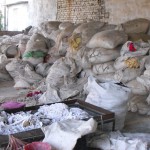
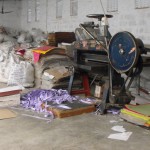
Being the technical manager currently, this leaves the everyday duties for me to do. This week was no exception and I actually found myself finding more things I needed to get done. First off, I went to a city about two hours from our village and ordered handmade paper diaries to cover and sell at the center. The paper factory was a great business to see, especially in India. All the paper made in the factory is made from recycled cotton scraps bought from clothing factories. I had begun to think that no one recycled anything in India, and it was a great relief to see a business that was using recycled materials to make an amazing product.

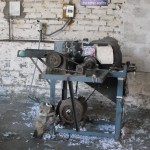
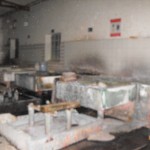
They first buy the cotton material from the factory and separate them buy color. After separation, they soak the material in vats of water to make a cotton pulp, much like factories do with wood chips for papermaking. The pulp is then layered on top of a screen in the next vat of water then pulled up to make a sheet once dried on the screen. The paper sheet is then placed between two steel plates and rolled out to ensure the paper is compressed and smooth. The paper is then dyed if needed to be a different color and some are screen printed on as well. They sell the paper only, but can make different products if bought in bulk.

The week went by fast after that, and I kept coming up with things that needed to be done in the city. So this weekend, my trip to Jodhpur was one full To Do List and involved shopping for materials, running errands, and trying to find time to relax with friends. This sounds easier than you would think. It is almost impossible to shop in India and get a fair price as a white person. Due to these circumstances, I had to wait for someone who could go shopping with me to translate and ensure a low prices point for the materials needed for the center. Once this was done, and many bags later, that was one thing off the list and it was already Saturday evening. So the next day I spent getting my errands done as well as running more errands for the center and buying leggings for the girls in the village, since they are unable to go to the city or make them like the ones I have bought.

So at the moment I am still in Jodhpur waiting to go back with my host father because there is practically no way for me to fit my bags and all the bags of materials bought for the center in a crowded rural bus usually stuffed to the brim with 50 plus people sitting or standing, or more likely shoved into the ram shackled public transportation…

Charity Challenge! (Days One and Two)

Most of you know because I tried to spread the word about it but in November I completed GVI’s Big 5 Charity Challenge. It was a 5 day challenge where we travelled 350km using non-motorized transport. It was over 200 miles! We raised money for Ikhayalethemba Village which is an orphanage close to the school where I work. I have visited the orphanage many times (as GVI also has volunteers there) and have been touched by all the amazing children that live there. Specifically, the money will be going towards remodeling buildings for new Grade R (Kindergarten) classrooms as part of the Village’s sustainability program. In addition, we raised money for the Hope Centre in Fish Hoek. The money will also be going to the Hope Centre to rebuild some classrooms. The Challenge was amazing and I enjoyed every minute of it. Here’s the first two days of the Challenge:
Saturday November 12th

I am so sore. I am beyond sore. I am in pain. Today was fun though. We started off the day early at 5 and then got ready, had breakfast and then after much to do travelled to Cape Agulhas the southern most tip of Africa and began the challenge. It started out really well. We were excited and even singing. This soon changed when we were met by hills (we weren’t expecting hills) and then the wind. The wind made it ten times worse than it would be normally. It was very difficult. I did well and pushed myself a lot. I found that if I sang even if it was to myself I was able to go farther then just focusing on what I am doing. So moral of story: sing. It helps, at least for me. We stopped a lot for breaks: pee breaks, food breaks which was good. We did however somehow lose or misplace the bike pump. Probably the most important thing you need on a biking challenge but whatever we pushed through. Then there was the punctuated tires. Somehow we managed to go through all our extra bikes because of punctured tires and since we didn’t have a bike pump we couldn’t really do anything. At one point, Nick decided to start running which was awesome. It turned out to not be necessary because soon after he started running, we saw two people with a bike pump and tires. God was definitely looking after us. Unfortunately because of wind and all the hills, we didn’t end up making it to Hermanus like we planned. So about 20km outside of Hermanus we had a team meeting and decided to push to Stranford which is a little ways outside of Hermanus. We all decided to push hard and we were all able to finish. It was very difficult though. I think we were all very tired at that point. I know I really want to stop then and there. I pushed myself hard on some hills and I definitely regretted it at that point. But I was able to finish. Ebonnie was also able to finish despite a knee injury. I think that’s all. I’m tired, going to bed. We start early again tomorrow!

Sunday November 13th

Day Two started out just as rough. My alarm went off at 5:15 but I refused to get up. No other alarms went off either so we had a late start. I could barely sleep last night because of the pain. I have never been so sore. It just felt like I was burning. That and the fact that I heard rain pouring outside my window didn’t exactly encourage me out of bed. But our program manager got us all up and we were jogging in the rain by 7. We spent the next few hours biking in the pouring rain, getting soaked completely. Lucky for us, the weather did clear and we ended up having some great weather. By the time we finished I was almost completely dry which was lovely. Today had lots of hills but we were all mentally prepared for them so that made it a lot easier. We even had a baboon sighting (something common in this area). I was pretty nervous myself because they are very crafty. They have been known to get into people’s cars and take food (I wish I was joking!). I think we all pretty nervous. Almost all of us had food in our bags. But they left us alone and we left them alone and we passed them with no problems. That was pretty much our day. We walked 15km because the road was too narrow to bike (and feel safe) but besides that we biked the entire time covering 90km which brings our total up to 170km. So we are halfway there. Our goal is to travel 350km by the end of Day 5. Tomorrow the hope is to sail (fingers crossed) to Fish Hoek which is 40km away then to bike 20km which makes for a pretty easy day compared to what we have been doing. We’re not sure if we’ll be able to sail because of weather. We finished today in Gordon’s Bay which means I get to sleep in my own bed tonight! It was great because all the volunteers and staff who weren’t participating in the full Challenge were there to cheer us on and they even made us dinner which was amazing

I’ll finish up the rest of the Challenge next week!

Charity Challenge! (Days One and Two)

Most of you know because I tried to spread the word about it but in November I completed GVI’s Big 5 Charity Challenge. It was a 5 day challenge where we travelled 350km using non-motorized transport. It was over 200 miles! We raised money for Ikhayalethemba Village which is an orphanage close to the school where I work. I have visited the orphanage many times (as GVI also has volunteers there) and have been touched by all the amazing children that live there. Specifically, the money will be going towards remodeling buildings for new Grade R (Kindergarten) classrooms as part of the Village’s sustainability program. In addition, we raised money for the Hope Centre in Fish Hoek. The money will also be going to the Hope Centre to rebuild some classrooms. The Challenge was amazing and I enjoyed every minute of it. Here’s the first two days of the Challenge:
Saturday November 12th

I am so sore. I am beyond sore. I am in pain. Today was fun though. We started off the day early at 5 and then got ready, had breakfast and then after much to do travelled to Cape Agulhas the southern most tip of Africa and began the challenge. It started out really well. We were excited and even singing. This soon changed when we were met by hills (we weren’t expecting hills) and then the wind. The wind made it ten times worse than it would be normally. It was very difficult. I did well and pushed myself a lot. I found that if I sang even if it was to myself I was able to go farther then just focusing on what I am doing. So moral of story: sing. It helps, at least for me. We stopped a lot for breaks: pee breaks, food breaks which was good. We did however somehow lose or misplace the bike pump. Probably the most important thing you need on a biking challenge but whatever we pushed through. Then there was the punctuated tires. Somehow we managed to go through all our extra bikes because of punctured tires and since we didn’t have a bike pump we couldn’t really do anything. At one point, Nick decided to start running which was awesome. It turned out to not be necessary because soon after he started running, we saw two people with a bike pump and tires. God was definitely looking after us. Unfortunately because of wind and all the hills, we didn’t end up making it to Hermanus like we planned. So about 20km outside of Hermanus we had a team meeting and decided to push to Stranford which is a little ways outside of Hermanus. We all decided to push hard and we were all able to finish. It was very difficult though. I think we were all very tired at that point. I know I really want to stop then and there. I pushed myself hard on some hills and I definitely regretted it at that point. But I was able to finish. Ebonnie was also able to finish despite a knee injury. I think that’s all. I’m tired, going to bed. We start early again tomorrow!

Sunday November 13th

Day Two started out just as rough. My alarm went off at 5:15 but I refused to get up. No other alarms went off either so we had a late start. I could barely sleep last night because of the pain. I have never been so sore. It just felt like I was burning. That and the fact that I heard rain pouring outside my window didn’t exactly encourage me out of bed. But our program manager got us all up and we were jogging in the rain by 7. We spent the next few hours biking in the pouring rain, getting soaked completely. Lucky for us, the weather did clear and we ended up having some great weather. By the time we finished I was almost completely dry which was lovely. Today had lots of hills but we were all mentally prepared for them so that made it a lot easier. We even had a baboon sighting (something common in this area). I was pretty nervous myself because they are very crafty. They have been known to get into people’s cars and take food (I wish I was joking!). I think we all pretty nervous. Almost all of us had food in our bags. But they left us alone and we left them alone and we passed them with no problems. That was pretty much our day. We walked 15km because the road was too narrow to bike (and feel safe) but besides that we biked the entire time covering 90km which brings our total up to 170km. So we are halfway there. Our goal is to travel 350km by the end of Day 5. Tomorrow the hope is to sail (fingers crossed) to Fish Hoek which is 40km away then to bike 20km which makes for a pretty easy day compared to what we have been doing. We’re not sure if we’ll be able to sail because of weather. We finished today in Gordon’s Bay which means I get to sleep in my own bed tonight! It was great because all the volunteers and staff who weren’t participating in the full Challenge were there to cheer us on and they even made us dinner which was amazing

I’ll finish up the rest of the Challenge next week!

Of Gardening & Rainbows

A part from the farm animals, much of where my time is spent is in the garden. Some of the basics this entails are the following: weed eating the property, watering the greenhouse, weeding the existing beds, creating seedlings, planting seedlings and sprouts directing into prepared ground, planting trees, making eggshell fertilizer, netting berry bushes and young trees, painting signs, forming teepees with stakes and string, throwing food scraps into the worm farm and fencing. Oh, here’s what’s currently growing or being eaten!

Tomato
Asparagus
Cucumber
Broad bean
Pak Choi
Snap pea
Pea
Gooseberry
Leek
Chamomile
Parsnip
Silverbeet
Florence fennel
Celery
Strawberry
Rhubarb
Garlic
Rosemary
Cauliflower
Lettuce
Cabbage
Beetroot
Parsley
Dill
Pumpkin
Courgette
Kale
Lemon
Spring onion
Cilantro
Spinach
Broccoli
and many more I’m probably forgetting

Compared to the soil I worked with in Tennessee, this rich stuff is soft and dark and chemical free. It’s easy to manipulate and shape. It hardens well in sunlight and filters rainfall with little to no water logs. I’d be lying if I said I loved doing anything more on the farm than putting my gloves on and using various garden tools, even if I haven’t expressed it as fully to the family. I’ll confess here accordingly. There’s something incredibly melodic about coming in for smoko or lunch and earning dirt stains on your trousers that weren’t there before breakfast. Or replacing your bandana after accidently dropping it in liquid manure. It’s a therapeutic act to use a water can for the greenhouse and to see several days later how the recipients grew a couple of inches.

Which brings me to ask, can you imagine a scenario where there wasn’t a need to go to a supermarket for most of our food needs? Where we simply walked into our backyards (or to community gardens for the city folk) and picked what you needed for dinner or had a local butcher package your meat? That we met and visited the farmer(s) who raised and supplied our produce?

Veggie garden (behind the WWOOFer cottage)

Greenhouse

Latest batch of seedlings

Bed to weed

Harvested rhubarb

I’ve been learning about the important components to a successful organic garden, and the elementary ingredients are 1) timing, 2) geography, 3) health of the soil, 4) the presence of worms and bees, 5) the H2O/sunlight/fertilizer relationship and my absolute LEAST favorite… 6) the annoying mood swings of Mother Nature.

Once upon a time I thought the frequent weather patterns in Nashville were bi-polar, but recent evidence would conclude that was an underestimation. It’s more dramatic in the Pacific. For example, from a hostel room in Te Anau, a town on the border of Fiordland, I witnessed and experienced a 24 hour forecast turn from sunshine (around 65 or so degrees) to snow (around 30 or so degrees) and to rain that caused the lake to fog over so much you couldn’t see the dominating mountains on the other side. Then I’d be at Marama walking maybe a dozen or so meters and in an instant, practically without warning, the unforgiving wind challenged me to stay on my feet. Temperatures staying in a small range can’t be counted on either; just because that bit of dirt is dry now doesn’t mean tomorrow won’t turn it into a mud bath or keep your fingers crossed, from moist earth to a frost the crops have to combat.

A clear, moon-lit night

The next morning at dawn

Mount Luxmore & Lake Te Anau

Same scene some hours later (that’s snow, by the way)

So with outdoor conditions like I’ve described, it’s a constant battle to work with and against them. But, when you fight them, continue to push yourself and finally win on a rare occasion, the reward is remarkable. Mother Nature might send you a rainbow to marvel at – when She’s cheery again.


“Triumphal arch, that fill’st the sky
When storms prepare to part,
I ask not proud Philosophy
To teach me what thou art.”
~Thomas Campbell

Thanksgiving!

Oh American Holidays... One of the many things that is really hard to explain to Indians, well anyone not from American actually. The time honored tradition of how the Native Americans were gracious hosts to the pilgrims who wanted to escape intolerant England and helped them when they were starving. And what did generations later do to those who lent a hand to their fellow man in need? They rounded them up into thousands and either killed them or placed them in the least desired plots of land in North America. Well, in the memory of that time, at the beginning of America’s history, our families gather for a warm and inviting celebration of giving thanks.

Our tables fill with many dishes, sometimes different depending on where in the U.S. you may be, or what your family traditions are, but there are always staple foods that must be on every Thanksgiving table. Turkey being the most important, then dressing (stuffing for you non-southerners), cranberry sauce, mashed potatoes, sweet potatoes, green beans, and of course… pumpkin pie! Excess food pouring over the sides of dishes while salivating mouths are waiting to eat because they haven’t eaten all day in preparation for the onslaught of food about to be consumed.

Well even though I am living in India right now, the other American interns living in Jodhpur and I decided that the best remedy for any homesickness or food cravings would be to make a Thanksgiving meal here in India! This was an endeavor that was great in thought, but not carefully thought through in order to be executed smoothly. With a grocery list consisting of nearly 30 items and not a single Westernized grocery store, the shopping started at 2 pm on Saturday for our meal that was planned for Sunday at 2 pm. Everyone split the list and started shopping around in two groups. After going to vegetable markets, and small stores, the hunting really began. Where the hell are we going to find marshmallows, evaporated milk, and cranberry sauce? After long ado, all was found at various places after asking person after person at stores, and even being given a phone to talk to different storeowners. I am really glad I missed out in having to get the chicken, because apparently they got to pick their chicken live, and then watch it being chopped up in front of their eyes. NO THANK YOU!

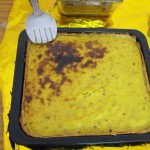
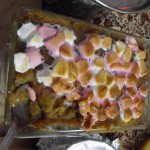
We finally got all of our cooking supplies and started prepping on Saturday night at our director’s house. After adjourning, we decided to meet at 9:30 the next morning to get the rest going in order to not delay the lunch plans. Well I got there at 9:30, but being in India, I waited on the others for a while, then a little longer to get things going. Finally, after all the prepping had been done, cooking had to ensue. This was the difficult part considering Indians do not have ovens, and they generally only have a double gas stove in their kitchen. We had to use a toaster oven to cook the sweet potato casserole, banana bread, and pumpkin pie, but surprisingly they turned out really tasty. With the help of our director, we had an extra gas stove brought in to cook and after we cooked most of our American food, the two Indian women from our organization made some Indian dishes as well.

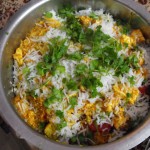
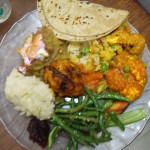
It was a hit! Separating the non-veg and veg items on two different tables, we pondered upon the smorgasbord of random foods in front of our eyes and teasing our taste buds. The tables consisted of mashed potatoes, sweet potato casserole (complete with marshmallows and pineapple), green beans, cranberry sauce, salad, matar paneer (peas and paneer), Indian layered rice dish, paneer gulab jamon, and steaming piles of fresh chapatti. On the non-veg table, our tandori-ish chicken, pumpkin pie (made from fresh pumpkin!), and peanut butter banana bread covered in Nutella. These were non-veg items because vegetarians in India do not eat eggs and there were eggs in the baked goods. Everyone, host families and all, thoroughly enjoyed themselves and the food. I am pretty sure the Indians preferred the Indian food though, probably because our American food just wasn’t flavorful enough for their palettes.