
Mzungu Mkasi Nzuri mbaya na mbaya

The White Guy with scissors. The Good, The Bad and The Ugly
The following poem can be read with or without the accompanying theme music.
The Ballad of Mzungu Mkasi
From the west of the west cold steel at his behest
A legend in bandage cutting
blades sing like a lark, splitting tape til they spark
he stalks around minor surgery
Who will stop this Madman!? Who can’t catch a tan
and cuts through dressings as if struck by the moon?
His Kiswhaili aint sharp, but his scissors sure are
He is known as….
Mzungu Mkasi*
*White Guy with scissors


The next hot poem… Europeans with Laundry
The Good
The best way to describe the people of Tanzania is “alarmingly friendly.” Tanzanians treat everyone like a member of their family, willing to help a stranger even at their own expense. I must admit this has been the largest source of culture shock. Locals walk right up to you and provide directions if you look lost, warn you of potential danger, and always ask about your day. Initially, (being the ever cautious traveler) I expected these interactions to end with a plea for money or a missing wallet. These fears were put to rest after ten straight days of locals yelling Karibu (welcome to) Tanzania! from across the street.
The Tanzanian lifestyle is called “polepole” meaning slowly and characterized by thriving in the present instead of stressing about the future. Life is a leisurely walk rather than a frantic run, and Tanzanians exist purely in the moment devoting their undivided attention to the task at hand.

Mosquito nets and little kids
Speaking with a local you feel as if you are the last two people on earth, basking in each others company. I must admit the welcoming, perpetually happy people of Tanzania have stolen my heart and (given my nickname is pokey “slow” joe back home) I have fallen in love with the polepole lifestyle.
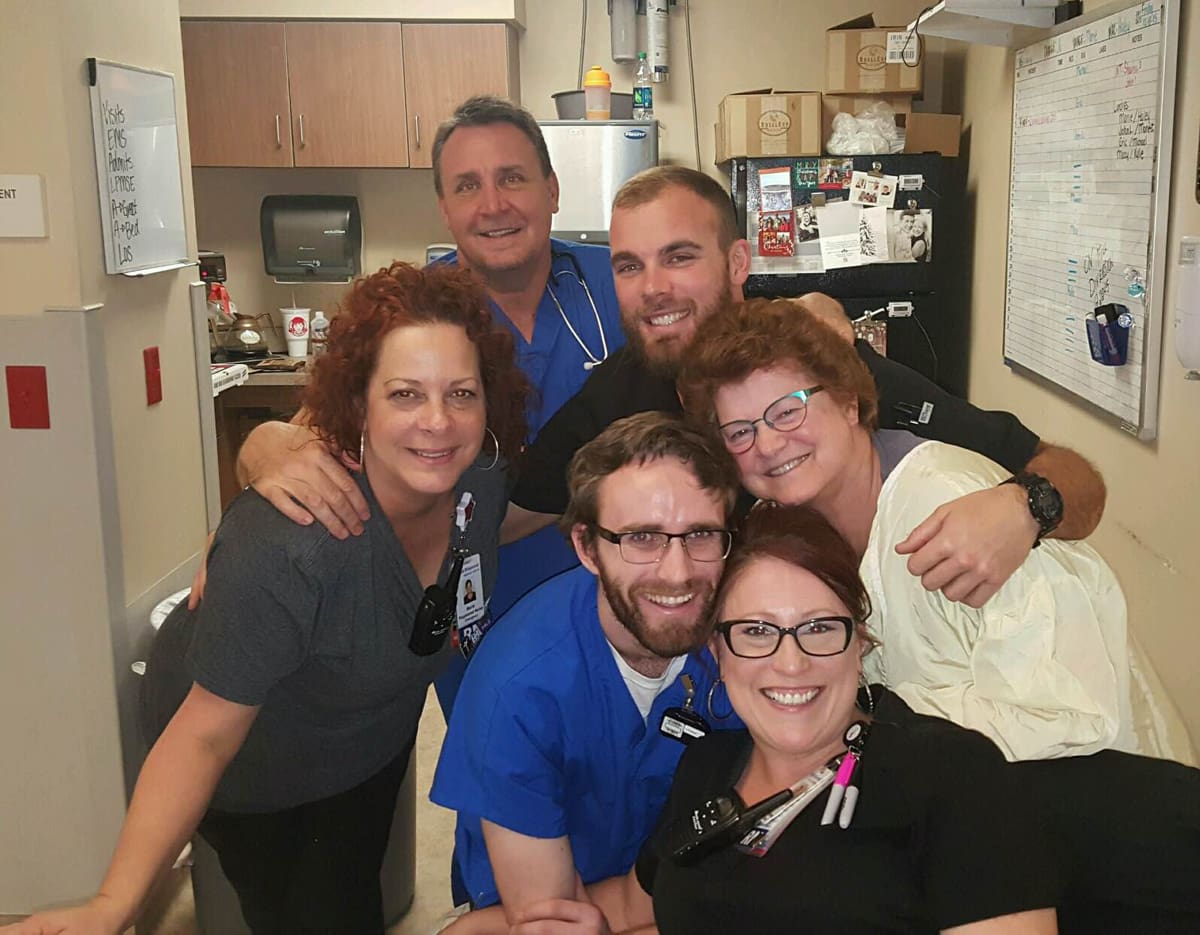
The welcoming culture extends through the Mwananyamala medical staff. I officially have around 7 nicknames, including Mzungu** Mkasi, Mzungu Medic, Johnny G, Johnny Walker, Mr. John, Johnny Bravo and Jack Black. Walking around the halls of the hospital I am always shadowed by calls of Johnny Walker! How is your day? We have missed you! I am constantly loaning out my medical equipment. So far, I am the only person with a penlight (torch), Trauma shears (aka scissors, Mkasi) and I often pass my stethoscope around whatever department I am working in.

When everyone speaks better English than you.
Thankfully, I am always able to find work around the different hospital departments. Now that I have gotten to know much of the medical staff, I am often able to help dress wounds, start IVs, and everything in between. I have spent most of my time in the “basic” departments like the minor surgery theater (wound dressing, abscess drainage, and stabilization), the labor/ delivery department and the emergency room. Being an AEMT makes me an interesting asset around the hospital as many routine medical procedures, like IV starts and wound dressing, are often performed by medical doctors. Accordingly, they only occur when time permits as the doctors spend most of their time attending to patients in the ward. While the skills I have are basic, being able to perform them allows local doctors to see more patients and make more diagnoses instead of being bogged down in the tedium of wound dressing. Mwananyamala is also a teaching hospital filled with Tanzanian medical students and many daktari are thankful I can take a blood pressure, so they can focus on teaching students.


I am in no way “fixing” or “saving” the Tanzanian hospital system***, but today a local doctor told me as I left, “Thank you, you were very much of a help today.” These tiny things reassure me that in a small way I am accomplishing what I set out to do.
The Bad
While polepole is an incredible lifestyle, it is not an effective way to deliver healthcare. I have no problems dealing with the less than ideal conditions (I expected equipment and staff shortages when I came to Dar Es Salaam), but I did not expect the decisions made by local doctors. I understand providing suboptimal care due to limited equipment and availability of resources, the same cannot be used to justify poor care due to incompetence. While most doctors in the hospital are professional and extremely qualified, there are a select few attendings whom I profoundly disagree with their treatment plans and diagnosis. I often encounter this problem working in the emergency room. Emergent cases are screened and diagnosed in the ER, but physicians will wait until the patient is admitted and moved to the ward before providing treatment. The wait time to get into a ward can be measured in several hours.


The only white person you have ever seen.
The most egregious examples are pediatric patients struggling to breath and trauma patients in desperate need of transfer. One aspect of the polepole lifestyle is that when a job is done quickly, it cannot be done well. A patient presented to the hospital after a bad motorcycle wreck with numerous abrasions/ scrapes, and obvious injuries to the head and chest. Unlike trauma activations back home where the patient is immediately; assessed, stabilized, and scanned/transferred if need be, Tanzanian patients with traumatic injuries are first sent to the “minor surgery theater” to get their wounds dressed first. Afterwards the patient is moved to the emergency room for any needed scans or transferred to another hospital, should additional resources be required.
The patient entered the hospital talking, responding to verbal commands and entered the Emergency Room an hour later with wounds beautifully dressed and completely unresponsive, unable to maintain his own airway because bleeding in his brain and stomach had progressed so far. The patient was then assessed, diagnosed with a potential traumatic brain injury/ stomach bleed and a request made to transfer the patient to the large national hospital, Muhimbili. The doctor working in the ER that day did not want to do anything to treat the patient as he thought all care should be performed at muhimbili. This extended even to airway management as the doctor did not want to suction the patient’s airway when he began to vomit. Another medically experienced volunteer and myself had to manually open the patient’s airway and attempt to manually clear it. We then waited three hours for an ambulance before the patient was transferred.

Can count backwards in Swahili. Tatu… Mbili… MOJA!!!!!
Hakuna Shida (No problems) is a great way to live your life, but taking your time with a traumatic brain injury may not provide the best outcomes.
The (not so) ugly
Working in any hospital provides a full spectrum of human life, the highest highs alongside the lowest lows. Mwananyamala has been incredibly fulfilling in so many ways, but it is the hardest thing I have ever done as a healthcare provider. Fortunately, the other volunteers have been welcoming, understanding, and a blast to hang out with. While the weekdays are occupied by work, the weekends have all been about exploring Dar Es Salaam and Tanzania. Other volunteers and I have been downtown to see the local sights, beaches, markets, and art. The last weekend culminated with a visit to Zanzibar. So while work has been a large part of my trip, there has been time for play.


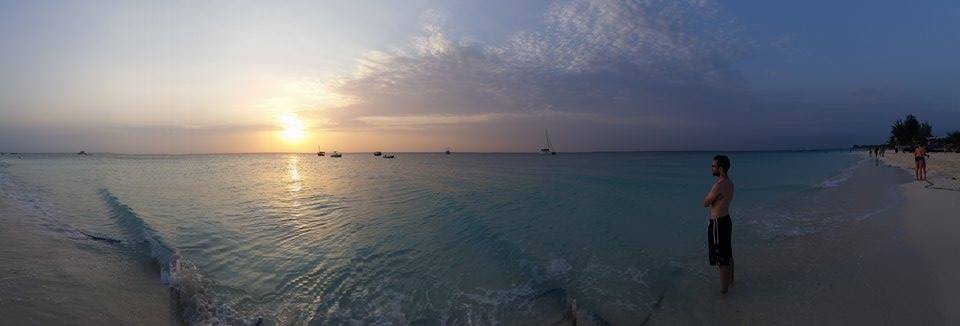
To Zanzibar (By Motor Car) Photocredit Amanda Arnved. Honestly. Zanzibar is this beautiful. I just need my friends to capture it.
I just want to end this post with a little conclusion.
- I hope you have a fantastic day.
- The people of Tanzania are incredible.
- I am beyond happy to be here.
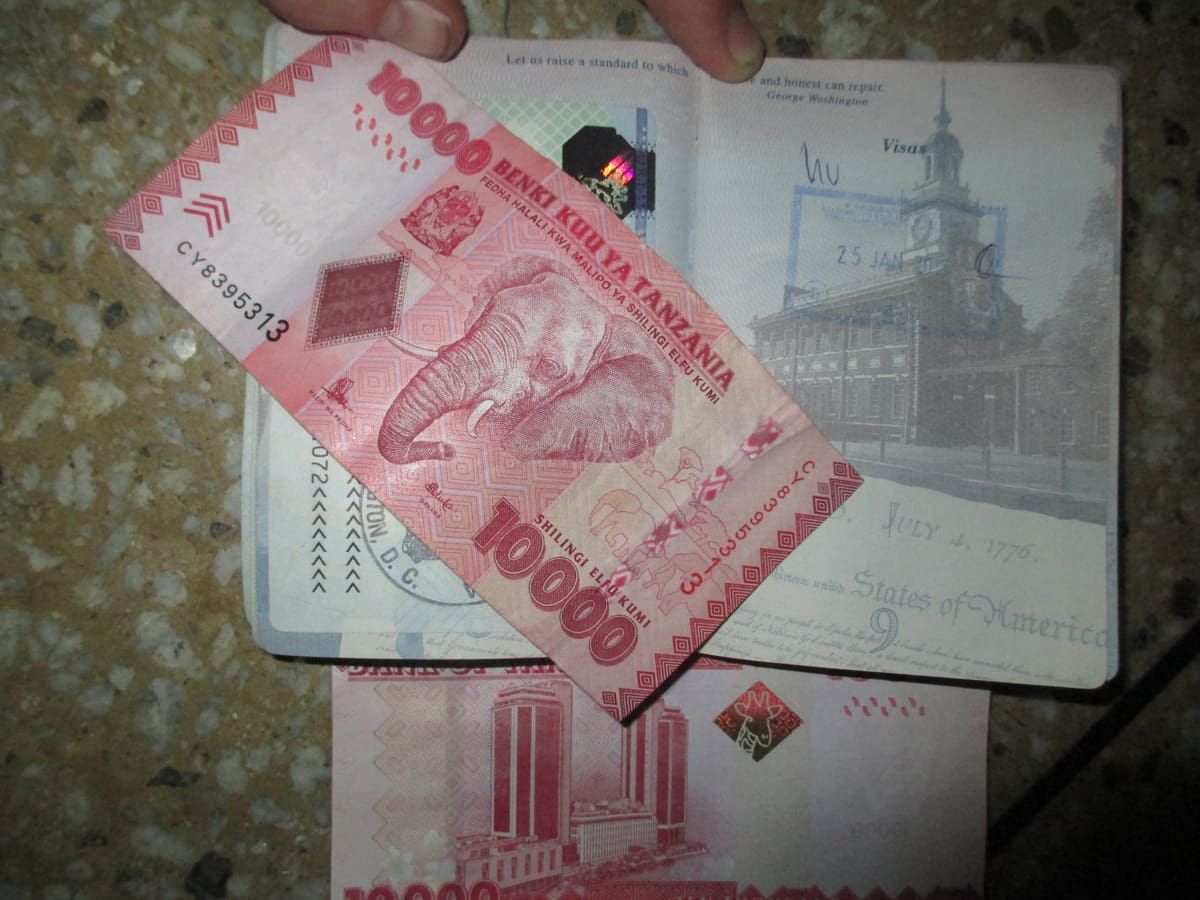
I did the math at a local KFC (you have been there before!) and found out that the average income of a fast food worker in Tanzania is 300,000 shillings a month. 1 dollar is approximately 2000 shillings, or $150 dollars a month aka $1,800 dollars a year. The average income of a Tanzanian is $600 dollars a month, so a very good living by Tanzanian standards. I took a bujaja home (a strange moped/ carriage hybrid) and the driver was going full polepole asking me about every aspect of my life, how I liked the states, how I liked Tanzania and if there was anything he could do to make my trip better.
He was more or less one of the nicest, happiest people I have ever met.
Here is his picture….

He looks like more or less one of the nicest, happiest people you have ever met.
I do not know how much this man makes, but odds are it is around $1.64 a day, and he can still smile so big it makes me want to tell the entire world.
I am not saying everyone should quit their job and move to Africa, but I think the world would be a better place if we could all smile just a little bit more like this bujaja driver.
I have so many more stories, but I feel that if I make this post any longer by the time you finish reading this two weeks will have passed and you will be due to read another entry (if you keep reading, thanks if you do).

Thank you for taking the time to read this insanely long post. To everyone who has commented, critiqued and wished me well, thank you so much. Every kind word of support means the world to me, and I hope all of you have a fantastic day!
As always I appreciate any and all feedback, question you have, or any recommendations. Have a great day!
**Mzungu- Kiswahili for white person. Derived from Mzunguzungu to be dizzy. Refers to wandering around aimlessly, or looking like you have no idea where you are. Pretty much me no matter where I am.
*** Mwananyamala has doctors from around the world (even a mzungu from penn state) teaching the next generation of tanzanian medical professionals… They are incredible. All kudos go to them.
More from this Author
-

Kuokoa Maisha
May the road rise up to meet you. May the wind be always at your back. May the sun shine warm upon
-
Karibu mtoto
“A sunlit walk in Africa” A Poem by: John Gossen Dimming light brings the shadows of night and relief from the African heat.
-
A first time for many things
My Grandmother is 100% Irish. As an ardent Catholic, she goes to church every day, reads during mass, and even has a rosary
Ready to Travel?
Are you curious and ready to dream big? Do you desire to challenge yourself and make a meaningful difference? Become a Lumos Traveler - let’s get you started!